
Whether you are a restaurant owner, a hotel owner, a supermarket owner, a cafe owner, or a food distribution company owner, you want to be able to count on your refrigeration equipment to keep your product fresh and your operation running. But it can be difficult to find the suitable equipment at a competitive price, particularly when you're dealing with suppliers from a different country. That is why cold cabinets China are a popular sourcing option for many international businesses.
There are many commercial refrigeration products available in China, such as upright refrigerators, display cabinets, under counter refrigeration and commercial freezers. There are also manufacturers who provide various sizes, materials, cooling systems, and customizations. But don't just consider the product price. Another important factor to consider is the manufacturer's experience, product specifications, quality standards, and shipping arrangements.
This guide will tell you about the information you need to take into consideration before you source a cold cabinet from China and how you can make better purchasing decisions.
What Are Cold Cabinets and Where Are They Used?
Cold cabinets are commercial refrigeration equipment used to maintain temperature control of food, drinks, and other temperature-sensitive products. They are used by businesses to store or display products under proper cooling conditions.
Commercial cold cabinets differ from standard home refrigerators in that they may have to withstand more frequent door openings, larger storage capacity, and longer running times. Manufacturers create various models for various business settings.
Cold cabinets are available in a number of industries:
- Restaurants and Commercial Kitchens: In restaurants, refrigerated cabinets are used for the storage of meat, vegetables, dairy products, sauces and prepared ingredients.
- Hotels and Hospitality Establishments: Hotels use them in kitchens, buffets, bars and food preparation areas.
- Supermarkets and Grocery Stores: Retail stores provide customers with easy-to-reach access to drinks, dairy, fresh food, and packaged goods through refrigerated display cabinets.
- Cafes and Bakeries: These establishments employ display fridges for desserts, sandwiches, beverages, and cakes.
- Food Processing Businesses: Food companies require larger refrigeration systems to hold their ingredients and products in controlled environments.
For instance, a hotel kitchen could require multiple stainless steel refrigerated cabinets to store ingredients, and a supermarket might require glass door display refrigerators to showcase beverages and dairy products. The type you buy should depend on what your business needs are.
What Types of Cold Cabinets Can You Source from China?
There are various kinds of cold cabinets available from the Chinese manufacturers. Each type is used for a different purpose, and it's important to know about the available options before asking for quotes.
Upright Refrigerated Cabinets
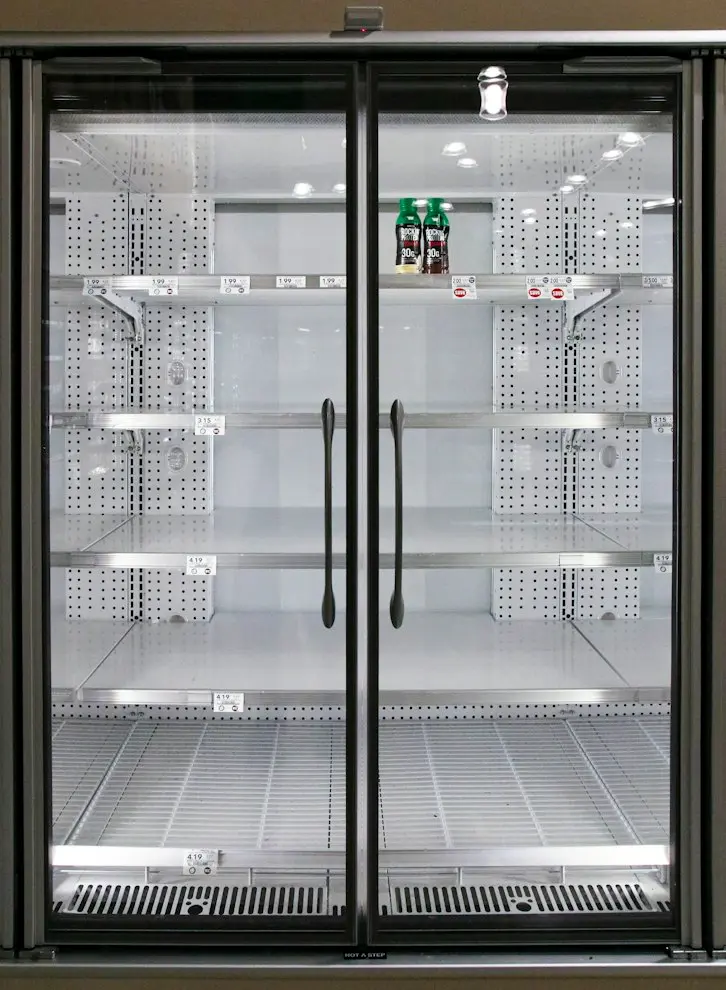
Upright refrigerated cabinets provide vertical storage and usually come with one or more doors. They aid commercial kitchens in arranging ingredients without consuming too much of the floor space.
Single door, double door, or multi door options are available based on storage needs. Verify the internal storage, shelving, door configuration and temperature range before buying.
A double-door upright refrigerator might be suitable for a busy restaurant, for instance, to keep vegetables, dairy products, and prepared ingredients in separate compartments.
Under-Counter Refrigerated Cabinets
Under-counter refrigerated cabinets fit under work surfaces and food preparation counters. They provide easy access to chilled ingredients and are useful for businesses to make efficient use of the kitchen space.
These units are ideal for restaurants, bars, cafes, and commercial kitchens where staff members require easy access to ingredients.
Make sure the cabinet height, worktop material, storage, ventilation space and cooling performance are considered when comparing models.
Display Refrigerated Cabinets
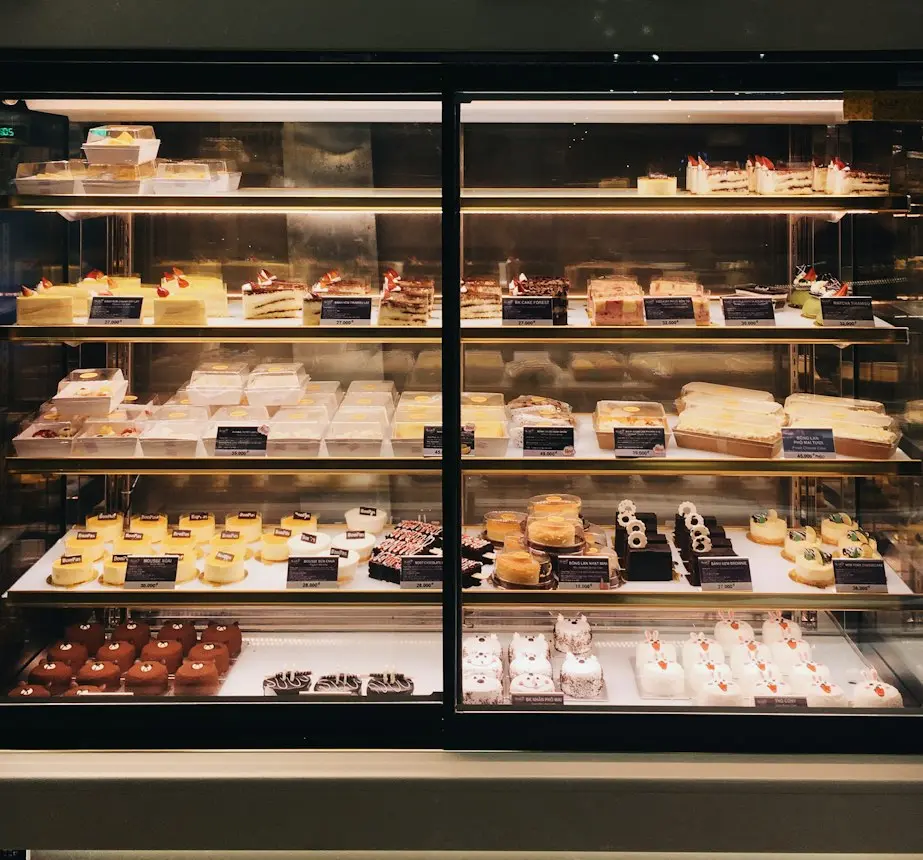
Display refrigerated cabinets are cabinets that enable businesses to store and display chilled products simultaneously. They are often made with glass doors or open-fronted.
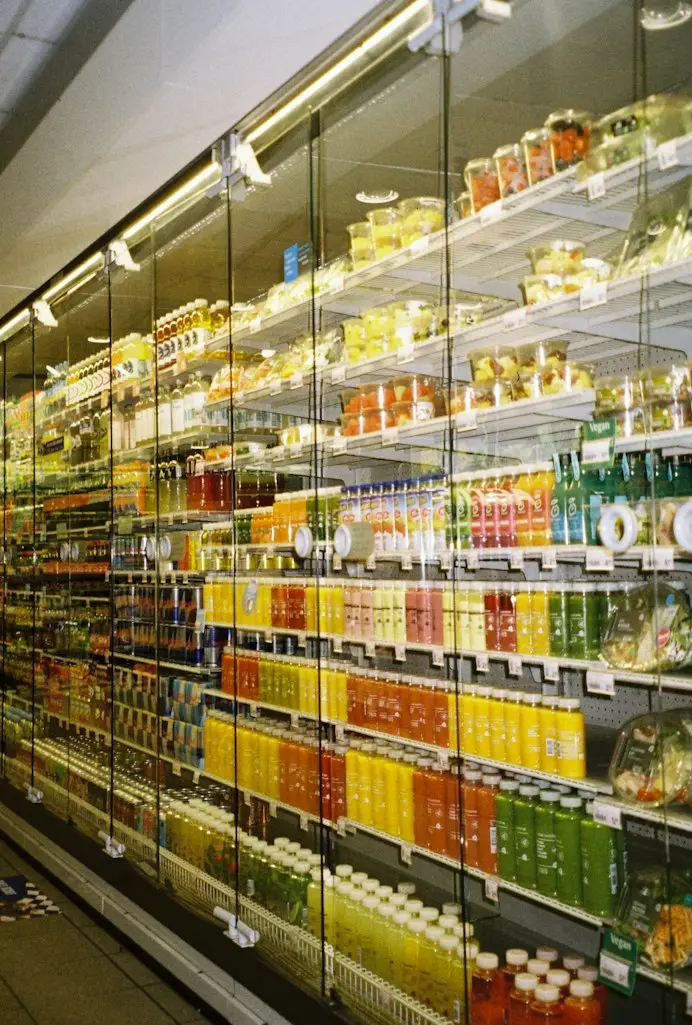
These cabinets are commonly found in supermarkets, bakeries, convenience stores and cafes, where they are used to showcase beverages, desserts, dairy products, and packaged food.
When choosing a display model, think in terms of visibility, lighting, temperature uniformity, shelf configuration, and energy usage.
Commercial Freezer Cabinets
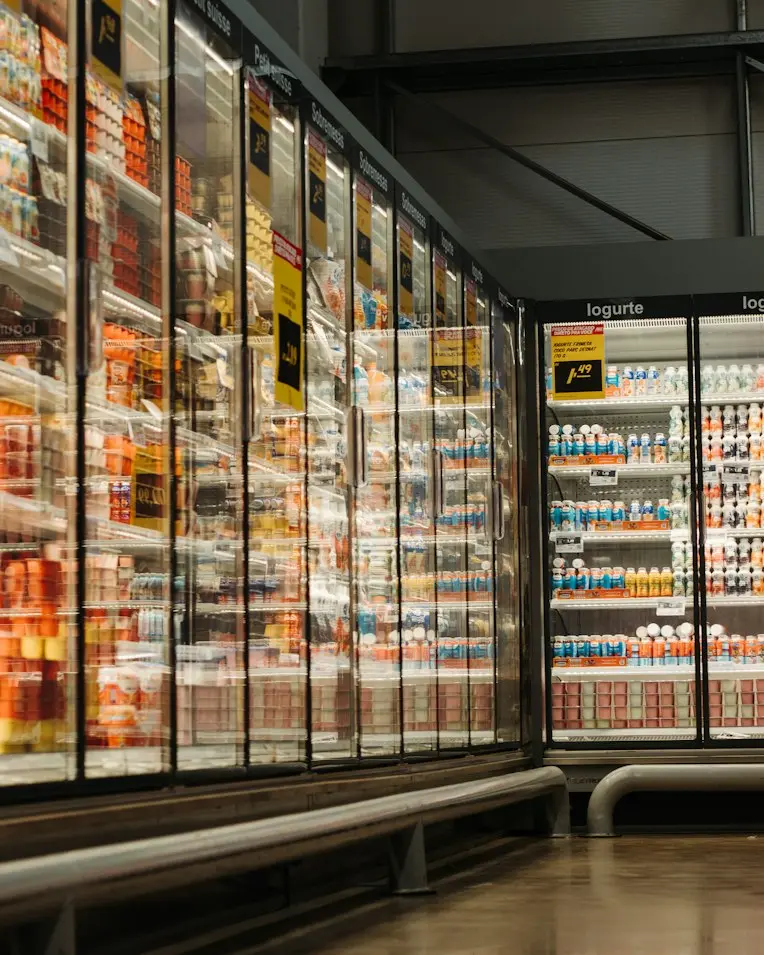
Freezer cabinets are used commercially to keep the product at the freezing temperature. They are widely used in restaurants, supermarkets, food distributors, and catering companies.
Either upright or chest types are available in various storage sizes. Before ordering, verify operating temperature, insulation, door seals and compressor performance.
Stainless Steel Refrigerated Cabinets
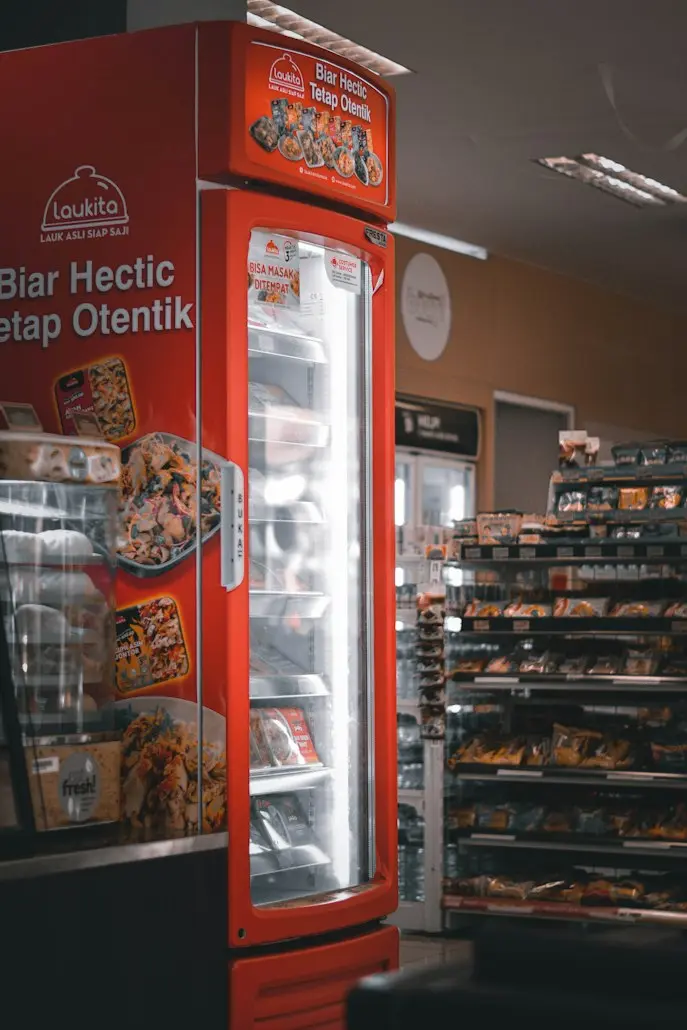
Stainless steel refrigerated cabinets are ideal for commercial kitchens, as they provide a more durable surface and are easier to clean.
They are typically made with stainless steel construction and have adjustable shelves and useful door designs. But, not all stainless steel cabinets are created equal. Inquire from suppliers about the steel grade, thickness and construction.
Why Source Cold Cabinets from China?
China is a good choice for international buyers because its manufacturing industry has a wide range of commercial refrigeration products, production capability, and customization.
But the real benefits will be based on the manufacturer, quantity ordered, product specifications, and shipping costs.
1. Competitive Manufacturing Costs
Chinese manufacturers provide various sorts of products at various price levels. This provides you with more options to compare suppliers and choose equipment that falls within your budget.
But the lowest quote is not necessarily the best value. A lower cost cabinet might have lower-quality insulation, lower quality components, or require a more energy-intensive cooling system.
- Expert Tip: When deciding which quotation is better value, compare the compressor, insulation, materials, warranty, accessories, and packaging.
2. Wide Range of Designs and Configurations
Chinese suppliers provide various sizes, door types, cooling systems and finish and storage configurations of cabinets.
They offer standard models for common business applications or custom-made products for particular projects.
For instance, a hotel might require a number of under-counter refrigerators to suit their kitchen space, and a supermarket might need a number of glass door display cabinets of the same size.
3. OEM and ODM Manufacturing Options
For those who require refrigeration equipment that is customized, many manufacturers provide OEM and ODM services.
- OEM (Original Equipment Manufacturing): You give them your product requirements, your branding or your design specification, and the manufacturer makes your equipment.
- ODM (Original Design Manufacturing): The manufacturer provides a design that is already in use and which you can modify to suit your business needs.
Custom dimensions, branding, door layouts, finishes and internal layouts are available depending on the factory's capacity.
Before approving a custom design, always check the minimum order quantity, customization fee, production lead time, and prototype requirements.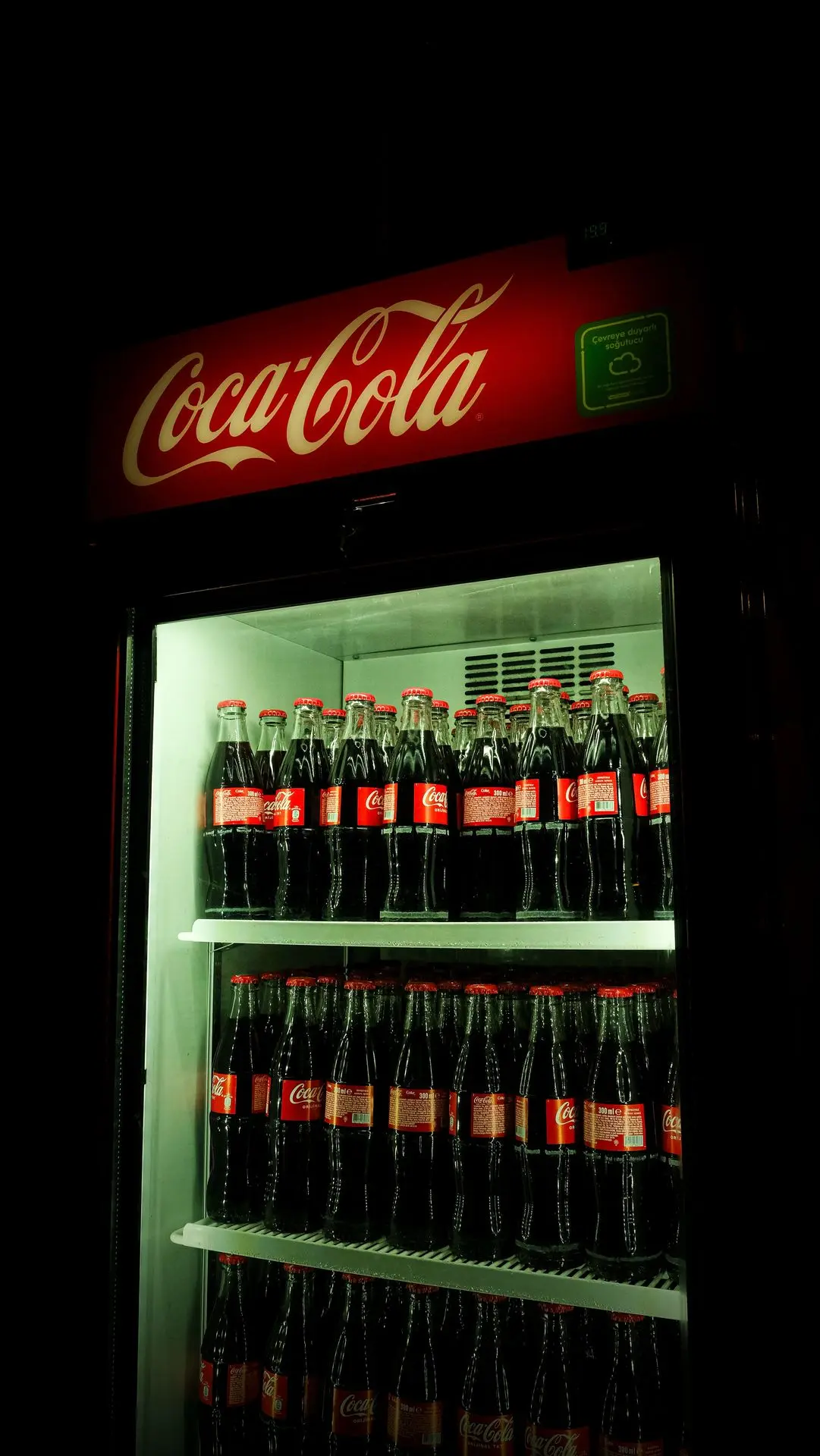
4. Access to Different Manufacturing Capabilities
There are manufacturers in China specializing in commercial refrigerators, display coolers, freezer and other refrigeration equipment.
This provides customers with greater alternatives when they require products for various business purposes.
But check with each supplier to see their actual manufacturing experience. A beverage cooler manufacturer might not have the technical know-how to make large commercial kitchen refrigerators.
What Specifications Should Buyers Check Before Purchasing Cold Cabinets in China?
Technical requirements should be determined prior to asking manufacturers for quotations. Clear specifications enable suppliers to make the appropriate model recommendations and to compare offers accurately.
The key information you need to verify.
Cabinet Size and Storage Capacity
Begin by considering the available space for installation and the storage requirements of your business.
Check these measurements:
- Outside dimensions: width and depth.
- Internal storage volume.
- Number and arrangement of shelves.
- Size and direction of door openings.
- Required ventilation and clearance space.
For instance, a small cafe might require a small under counter refrigerator, and a hotel kitchen might need several large upright cabinets.
Don't choose a model based on the outward dimensions only. The amount of equipment that can be stored is also influenced by internal storage space and the arrangement of the shelves.
Cooling System and Temperature Range
How the cabinet maintains its operating temperature is dependent on the cooling system.
Common options include:
- Static Cooling: This is a natural cooling system that circulates cold air. May be suitable for some storage applications, but temperature distribution may be different within the cabinet.
- Fan-Assisted Cooling: Cold air is circulated in the storage area by a fan. Depending on the way the cabinet is designed and how it is used, this can result in better temperature distribution.
Inquire with the manufacturer about the temperature range and testing conditions. Also note the time it takes for the cabinet to reach the set temperature and the performance of the cabinet when the doors are opened often.
- For example, a restaurant kitchen that is used a lot could use a model that had fan-assisted cooling since the staff often gets in and out of the stored ingredients.
Refrigerant Type
The refrigerant plays an important role in the cooling process. Various refrigerants are used in different refrigeration systems, and the environmental and safety needs vary from market to market.
Some common refrigerants used in commercial refrigeration include R290 (propane), R600a (isobutane), and some HFC refrigerants.
You should check:
- The specific refrigerant that has been installed in the model.
- Its environmental impact and its global warming potential (GWP).
- If it is permitted under local regulations.
- Installation and servicing safety needs.
- Availability of trained technicians and replacement parts in your market.
For instance, the revised F-gas Regulation in the European Union (EU) sets limits on a number of refrigerants and refrigeration equipment categories. Hence, it is important that the European purchaser checks that the chosen model complies with the requirements in force before placing an order.
Do not select a refrigerant solely on its cooling ability. Local regulations and equipment design and servicing requirements must also be taken into consideration.
Insulation and Energy Efficiency
A cold cabinet with good insulation will help keep the temperature inside the cabinet and minimize the amount of heat that can enter the storage area.
Ask suppliers about the insulation material, thickness, door sealing, and energy usage.
Also ask for technical data on the daily consumption of electricity under the appropriate test conditions.
Though a lower price may be seen as a benefit, if the cabinet requires a lot of electricity, it becomes a cost to run. So, not only compare the initial price but also the expected running costs.
Electrical Requirements
When importing refrigeration equipment, it is important that it is electrically compatible.
Before purchasing, confirm:
- Rated voltage.
- Electrical frequency (Hz).
- Power consumption.
- Type of plug and connection.
- Electrical protection requirements.
For instance, if the buyer is in a 220-240V market, they should not expect that all Chinese models will conform to the local electrical supply. Contact the manufacturer to verify the electrical set-up at your destination.
Materials and Construction Quality
The type of cabinet you choose will affect the durability, cleaning needs, and performance of the cabinet over time.
Inspect the following:
Component | What to Check |
Cabinet Body | Grade, thickness and finishing of stainless steel |
Insulation | Material, thickness, and consistency |
Doors | Hinges, handles, and alignment |
Door Seals | Tight fit and resistance to wear |
Shelves | The load capacity and resistance to corrosion. |
Compressor | Brand, model and technical specifications |
Controls | Functions of displaying and adjusting the temperature. |
Request the supplier to provide product photos, technical drawings and material specifications. These details will help you to compare more accurately.
How to Find Reliable Cold Cabinet Manufacturers in China?
It's not enough to simply peruse product listings to find a suitable manufacturer. It's important to assess the supplier's business background, production capacity, technical know-how and export experience.
Search for Manufacturers, Not Just Trading Companies
The first step is to find commercial refrigeration equipment suppliers.
A manufacturer typically controls its production process and a trading company buys products from other factories and sells them.
Both can cater to international buyers; however, you need to know who is actually going to manufacture your order.
Ask suppliers:
- Is this product made in your own manufacturing unit?
- What are your specialties in refrigeration products?
- Do you have any pictures from the factory or videos of the production?
- Do you have experience exporting to my country?
- Are you able to produce based on my technical specifications?
These questions will help you determine if a supplier can do your project.
Verify Business Credentials and Factory Experience
Verify the supplier's registered business details, factory address, production facilities and previous export experience.
Other product certifications, quality management documents, and references of customers can be requested as well.
Don't trust only certificates that are posted on a website. Be sure the paperwork is from the manufacturer and that it applies to the same model you are buying.
Compare Multiple Supplier Quotations
Obtain multiple quotes from multiple qualified suppliers based on the same product specifications.
This helps to distinguish the differences in pricing, materials, components, warranties, and production time.
For example:
Quotation Details | Supplier A | Supplier B |
Cabinet Capacity | 600 L | 600 L |
Compressor | Specified model | Different model |
Insulation | 60 mm | 50 mm |
Warranty | 1 year | 2 years |
Price | Lower | Higher |
While perhaps Supplier A's product is cheaper, Supplier B may have a better warranty and thicker insulation. It is advisable to compare the whole offer before deciding.
Request Samples and Technical Documents
When possible, request product samples, or ask for a first article sample before approving large scale production.
Other items to gather include
- Product specification sheets.
- Technical drawings.
- Compressor details.
- Refrigerant information.
- Electrical specifications.
- Test reports and certificates that are available.
- Warranty terms and maintenance instructions.
These documents are useful to verify that the product meets your needs.
What Quality Checks Are Important When Sourcing Cold Cabinets from China?
Before shipment, cold cabinets should be inspected for manufacturing defects and technical problems. An inspection plan will help you to ensure that the finished products meet your approved specifications.
Check Cabinet Construction and Finishing
Examine the body, doors, hinges, handles, shelves and cabinet interior.
Check for dents, scratches, uneven joints, loose parts, and any lack of finishing. Ensure that doors fit properly and seals are tight.
It is also recommended to check the final product against your approved sample.
Test Refrigeration Performance
Request the manufacturer to test the cooling system under mutually agreed test conditions.
Test to see if the cabinet reaches the specified temperature and maintains appropriate cooling.
Check the temperature indicator, thermostat, compressor and door rubber seals.
- For instance, if a cabinet is ordered with a stated operating range, request that the factory not only confirm the range verbally but also document the actual temperature at which the test was conducted.
Inspect Electrical Components
Inspect wiring, control panel, electrical connections, plug and safety devices.
Ensure that the manufacturer adheres to the approved electrical specification and provides the appropriate configuration for your destination market.
Also ask for any relevant documentation of electrical safety tests.
Check Packaging Before Shipment
Commercial refrigerators have parts that must be handled with care when transporting them.
Check packaging for protection of doors, corners, panels, and other vulnerable areas.
Ensure the supplier is using appropriate protective materials and packing the equipment securely inside the shipping container.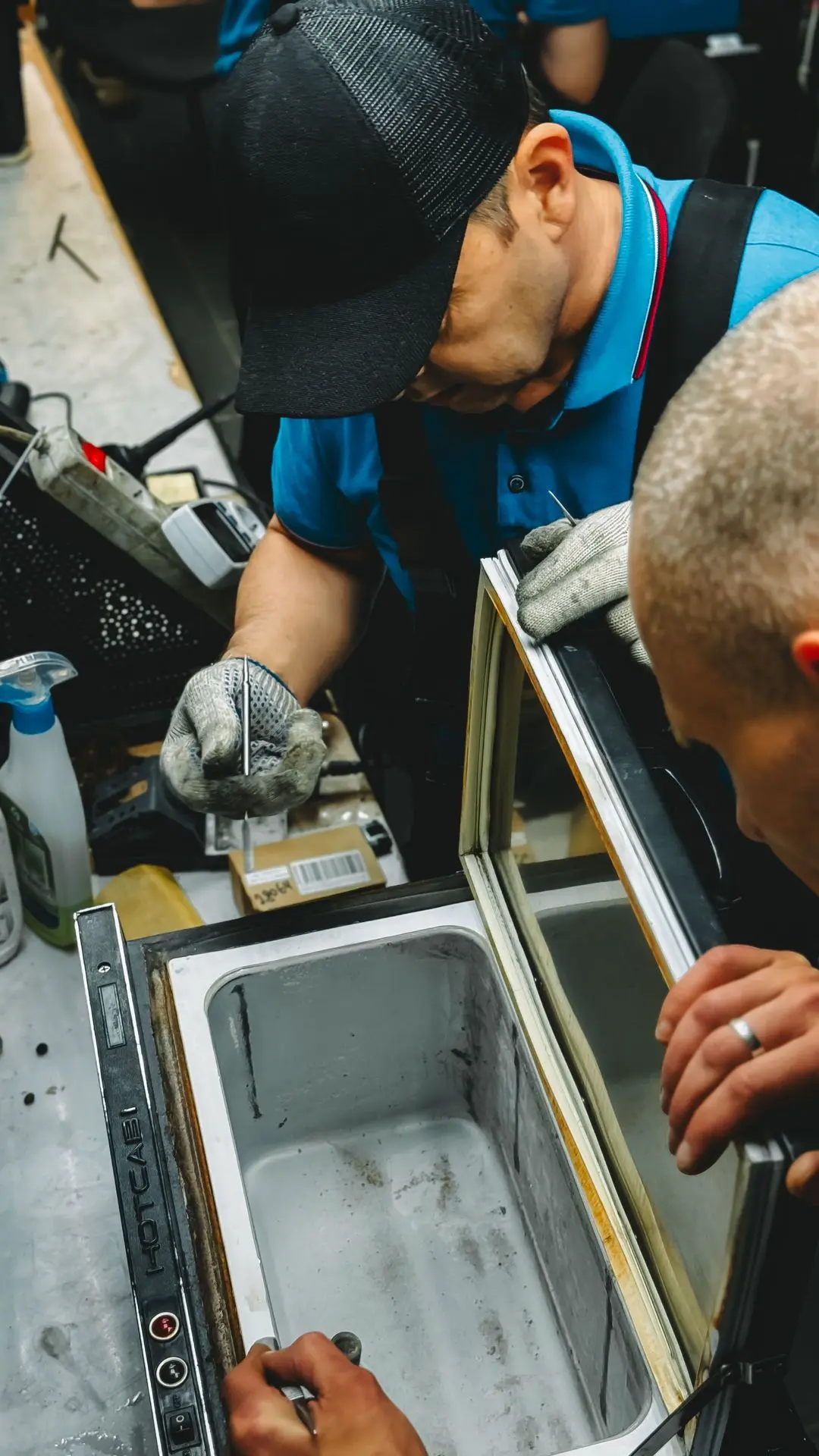
What Certifications and Compliance Requirements Should Buyers Consider?
The certification requirements vary from country to country, specific equipment types, and specific applications. These requirements should be known prior to production and not at the time of the goods being brought to customs.
The following tips are important:
- CE Requirements: If the buyer is importing applicable products into the European Economic Area, they should verify the applicable EU safety, electromagnetic compatibility, and other laws.
- UL or ETL Certification: Customers providing to the North American market may require equipment to comply with applicable electrical and product safety requirements.
- Food Equipment Standards: In some commercial refrigeration applications, compliance with food equipment standards like NSF/ANSI 7 in applicable US markets is required.
- Energy Efficiency Standards: Several countries have laws and regulations on the energy use and testing of commercial refrigeration equipment.
- Refrigerant Rules: Buyers are responsible for ensuring that the refrigerant and equipment comply with the rules of the environment market.
The European Commission, for instance, has different ecodesign and energy-labelling regulations for professional refrigerated storage cabinets and refrigerating appliances for direct sale. The rules may differ between these categories.
Also be careful to differentiate between a manufacturer's declaration, a test report, and a real third party certificate. They are not of equal quality in their evidence.
- Expert Tip: Request the specific model number for each certificate and test report. A document for a similar product does not necessarily mean compliance for your chosen model.
How Much Does It Cost to Source Cold Cabinets from China?
The price of cold cabinets from China is based on product specification, quantity, materials, customization, and shipping. The landed costs should be calculated, rather than just the factory prices.
The primary cost factors are listed below.
Product Size and Refrigeration Capacity
The larger the cabinets, the more materials are needed and possibly larger refrigeration systems. Their size also impacts packaging and shipping.
Make an apples to apples price comparison between models that have the same capacity and cooling specifications.
Materials and Customization Requirements
Purchase prices may vary based on stainless steel quality, insulation thickness, compressor type, glass doors, digital controls, and custom finishes.
The cost of manufacturing may also be higher with OEM branding and special dimensions.
Order Quantity and Manufacturing Costs
Small and large orders could be offered at different prices by the manufacturers. But also consider the minimum order quantity and any setup fees for custom products.
Costs of Packaging and Inspection
Export packing, protective materials, product testing, and third party inspections can be additional costs in your procurement budget.
These costs are for minimizing the risk of receiving the wrong or damaged products.
International Shipping and Import Duties
Fees you might have to pay:
- Inland transportation in China.
- Export documentation.
- Sea or air freight.
- Cargo insurance.
- Customs clearance.
- Import duties and taxes.
- Local transportation and delivery.
For instance, the buyer who wants to buy 20 refrigerated cabinets should check the total price for the cabinets, inspection, packing, freight and import charges before choosing a supplier.
How to Ship Cold Cabinets from China to Your Country?
Sea freight or air freight can be used to ship cold cabinets from China. The correct approach will depend on the size of your order, how quickly you need it, how much you have to spend and the size of your equipment.
Sea Freight for Large Orders
Sea freight is typically a good choice for bulk shipments and commercial projects, as it provides a viable solution for sending large equipment.
There are two popular shipping options:
- FCL (Full Container Load): You book an entire container for your shipment.
- LCL (Less than Container Load): Goods are loaded with other importer's cargo in the container.
FCL might offer more control over the shipment if you are ordering multiple cabinets or multiple products for a hotel or restaurant project. LCL can be used for smaller orders if they don't require a full container.
Air Freight for Urgent Shipments
Air freight is more expensive than sea freight and can provide quicker transportation.
Consider using it for urgent equipment replacement, samples, or smaller shipments. But high air freight costs may be caused by large commercial cabinets due to their size and weight.
Packaging and Container Loading
Ensure that the manufacturer is using appropriate export packaging before shipping.
The supplier should safeguard the door, the glass panels, the corners and the refrigeration elements. Proper loading also minimizes movement and damage when transporting.
Handling instructions and loading arrangements should be agreed upon prior to departure of the shipment from the factory.
Shipping Documents and Import Requirements
Fill out necessary shipping and customs materials in advance of dispatch.
Common documents include:
- Commercial invoice.
- Packing list.
- Sea freight bill of lading or air waybill for air freight.
- Certificate of origin, if applicable.
- Certificates and test documents that are applicable to the product.
- Customs declaration and other destination documents.
Your freight forwarder or customs broker will be able to assist you in making sure the documents and import requirements for your country are confirmed.
What Common Mistakes Should You Avoid When Sourcing Cold Cabinets from China?
A supplier can look attractive with a low quotation or an attractive product photograph. But be sure to verify the entire purchase procedure prior to making a payment.
Don't make these mistakes:
- Selecting the Lowest Cost Supplier: The lowest cost supplier may be using lower quality materials, components, or warranty coverage.
- Not Considering Electrical Compatibility: If the voltage or frequency is not compatible, it may cause installation and operating issues.
- Ignoring Refrigerant Needs: Using the wrong refrigerant could result in compliance or servicing issues in your target market.
- Not Testing the Product: Always make sure to test functionality and temperature before shipping.
- Not Considering Spare Parts Availability: Inquire about replacement compressors, door seals, thermostats, and other service parts.
- Not Verifying Warranty Terms: Make sure to verify the warranty period, coverage, exclusions, and repair terms.
- Not Carrying Out Pre-Shipment Inspections: Check the completed order before the supplier loads for export.
- Not Accounting for Landed Costs: Factor in freight, customs, taxes, insurance, and local delivery.
With a little preparation, you can prevent the expensive problems that can follow equipment delivery.
How Can Guangzhou Sourcing Help You Source Cold Cabinets from China?
The process of sourcing commercial refrigeration equipment can be a multi-step process, from finding the right suppliers to verifying product quality and arranging international shipping. It takes time to manage each step remotely, particularly when you're working with multiple manufacturers.
Guangzhou Sourcing offers international buyers a range of services to help them handle sourcing in China, including supplier sourcing, factory inspection, price negotiation, QC, and logistics. We collaborate with your product requirements and assist you with the sourcing process.
Finding and Evaluating Suitable Manufacturers
We find suppliers based on your product requirements, budget, and project needs at Guangzhou Sourcing. We have our own supplier database and relationship with factories, and through other research channels, we are able to source suitable options.
We also assess supplier backgrounds and manufacturing capabilities to assist you in making informed purchases.
Supplier Due Diligence and Price Negotiation
We do supplier due diligence and quotation comparison at Guangzhou Sourcing so that you can have an understanding of the difference between manufacturers.
We are able to negotiate product prices, payment terms, trade terms, and agreed quality requirements with our team. We deal with full purchasing terms and not just price.
Quality Control and Production Follow-Up
Guangzhou Sourcing arranges QC inspection to ensure that the products comply with your agreed specifications.
We offer pre-production inspection, first article inspection, pre-shipment inspection, and container loading inspection. You can also add other quality control procedures as per your project needs.
Compliance & Documentation Support
At Guangzhou Sourcing, we can assist you in verifying product certificates available and coordinating compliance requirements according to your destination market.
We can also put together necessary documentation and convey product requirements to suppliers prior to production.
Warehousing, Consolidation and International Shipping
At Guangzhou Sourcing, we arrange warehousing and consolidation of containers and international shipping for products from various suppliers.
We can offer both FCL and LCL logistics services. We can also accept goods from sev eral factories, arrange them in our warehouse, and arrange the goods for delivery in your larger procurement project.
This approach can be useful for dealing with multiple orders for a product, using one sourcing effort.
Conclusion
When you source cold cabinets China, you can be able to gain access to various commercial refrigeration products, competitive manufacturing options, and custom solutions. But choosing the right supplier, technical evaluation, quality checks, and shipping arrangements are required for a successful procurement. With knowledge of these requirements prior to ordering, sourcing risks can be minimized and purchasing decisions can be improved.
Guangzhou Sourcing provides supplier research, factory due diligence, price negotiation, quality control and international logistics coordination to help businesses simplify procurement in China.
Contact us today about your cold cabinet sourcing needs, and we can assist you with the appropriate cold cabinet suppliers for your business or commercial project.
Frequently Asked Questions
1. Is China a Good Place to Source Commercial Cold Cabinets?
Yes, China commercial cold cabinets are popular sourcing options, as manufacturers provide a variety of product designs, capacities, materials, and customization options. It is possible to compare different suppliers to find equipment that fits your technical needs and budget.
Before placing an order, however, it is advisable to check the production capacity, product quality, certifications and export experience of the manufacturer.
2. How Do I Find Reliable Cold Cabinet Manufacturers in China?
Firstly, conduct research on the commercial refrigeration equipment manufacturers. Look into their business registration, factory facilities, production experience, and export history.
Ask a number of suppliers for product specifications, technical documents, and quotations. There are also options to schedule factory audits and product inspections to assess their capabilities before making a purchase.
3. What Should I Check Before Importing Cold Cabinets from China?
Look for cabinet size, storage capacity, temperature range, compressor, refrigerant, insulation, and electric specifications. It is also important to ensure that the equipment complies with the safety and environmental standards of the destination country.
Also, check the warranty, availability of spare parts, packaging and shipping before you place the order.
4. Can Chinese Manufacturers Produce Custom Cold Cabinets?
Absolutely, lots of Chinese manufacturers provide OEM and ODM production services of commercial refrigeration equipment. You can ask for custom sizes, layouts, door designs, finishes, and branding based on the capabilities of the company.
But, before manufacturing, you should check the MOQ, customization costs, sample approval process, and production time.
5. How Can I Ensure the Quality of Cold Cabinets Before Shipping?
To maintain better quality control, you can approve product specifications, check product samples, monitor production, and have a pre-shipment inspection.
When inspecting, inspect cabinet construction, electrical components, cooling, temperature controls, and packaging. The finished products should also be compared to the approved sample and purchase agreement.