
Introduction
Laminated glass is an important component of today’s architecture, safety glazing and high-performance building design. It's two plies of glass with an interlayer in between. This interlayer is normally PVB (Polyvinyl Butyral) or SGP (SentryGlas Plus).
Even if they both contribute to enhancing safety and many other features, they are two separate things. PVB and SGP have different characteristics, which is why one might be more suitable for a particular application than the other. If you plan to source windows, curtain walls, balustrades, or other glass products from China, understanding the difference between these two interlayers could be of great help to you in figuring out which product will work best for your project.
In this post, we will explore the main differences between PVB and SGP laminated glass, their advantages, level of performance, and ideal uses.
What Is PVB Laminated Glass?
PVB refers to Polyvinyl Butyral. It is a soft thermoplastic interlayer that is used in laminated glass. In the glass industry, it is the most popular interlayer due to its good balance of safety clarity UV protection and acoustic properties.
When glass breaks, the PVB interlayer will keep the pieces together and reduce the scattering of the shards. That means, it not only improves the safety of the glass but also decreases the chance of injury.
The PVB interlayers come in different thicknesses with 0. 38 mm being the standard while the ones thicker are for high-performance applications.
Benefits of PVB Laminated Glass
- UV Protection: Most of the harmful UV rays can be blocked by PVB laminated glass which can keep the interiors from fading and sun damage. This feature is very useful for homes hotels offices, and retail spaces with furniture, flooring or artwork that are exposed to sunlight.
- Sound Reduction: PVB is also well known for its soundproofing qualities. It is capable of making a building quieter by preventing the noise of the outside from coming inside. This makes it a sensible choice in buildings in busy urban areas, near roads or close to airports.
- Safety Performance: The interlayer keeps the pieces of broken glass together so the glass doesn't shatter; making it safer than the normal glass and the risk of injury is also reduced.
- Cost-Effective Option: PVB is generally cheaper than SGP. That means, it can be regarded as the trustworthy and economical solution for many projects.
Common Applications of PVB Laminated Glass
PVB laminated glass is widely used in many industries and building types, including:
- Windshields and automotive glazing.
- Windows and doors in residential and commercial buildings.
- Skylights and curtain walls.
- Schools, hospitals, and public buildings.
- Decorative and artistic glass projects.
PVB is one of the most commonly used interlayer in the everyday architectural laminated glass because it is very flexible and highly effective all-around performing material.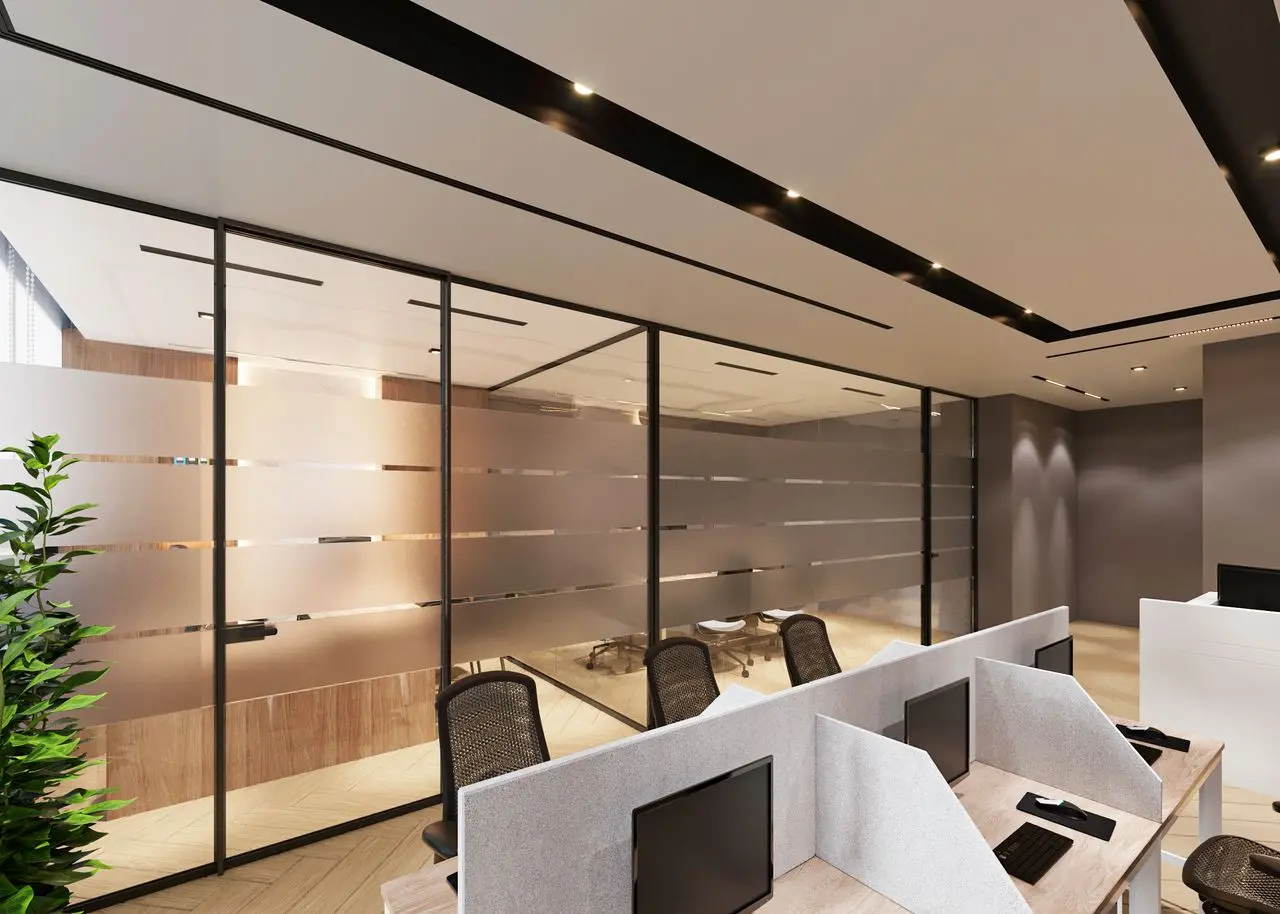
What Is SGP Laminated Glass?
SGP, or SentryGlas Plus, is a higher performing interlayer for more demanding structural and safety applications. SGP is stiffer and stronger than PVB, making it more suitable for projects requiring improved load bearing capacity and post breakage performance.
SGP laminated glass is often used in situations where structural integrity is important, especially in exposed or high risk environments.
The interlayer is typically offered in thinner gauges and is still very strong and durable, even when it is thinner.
Benefits of SGP Laminated Glass
- Higher Strength: SGP is significantly stiffer than PVB, allowing it to support higher loads and offer superior structural integrity under stress.
- Better Post-Breakage Performance: SGP laminated glass usually performs better after breakage. It’s a good choice for areas where safety and continued barrier performance are important.
- Weather Resistance: SGP is resistant to harsh environment such as heat, cold, humidity & strong wind load. It is especially suitable for exterior architectural use.
- Stronger Security Potential: SGP can be used in security glazing systems that require greater impact and forced entry resistance.
Common Applications of SGP Laminated Glass
SGP laminated glass is commonly used in:
- Balustrades and railings.
- Structural glazing systems.
- High-rise facades.
- Skylights and overhead glazing.
- Floors and stairs made with glass.
- Hurricane-resistant windows
- Swimming pool fencing
- Public infrastructure and transportation projects.
It is particularly useful in applications where glass is required to do more than simply enclose a space – it has to help carry load, resist movement and remain stable under pressure.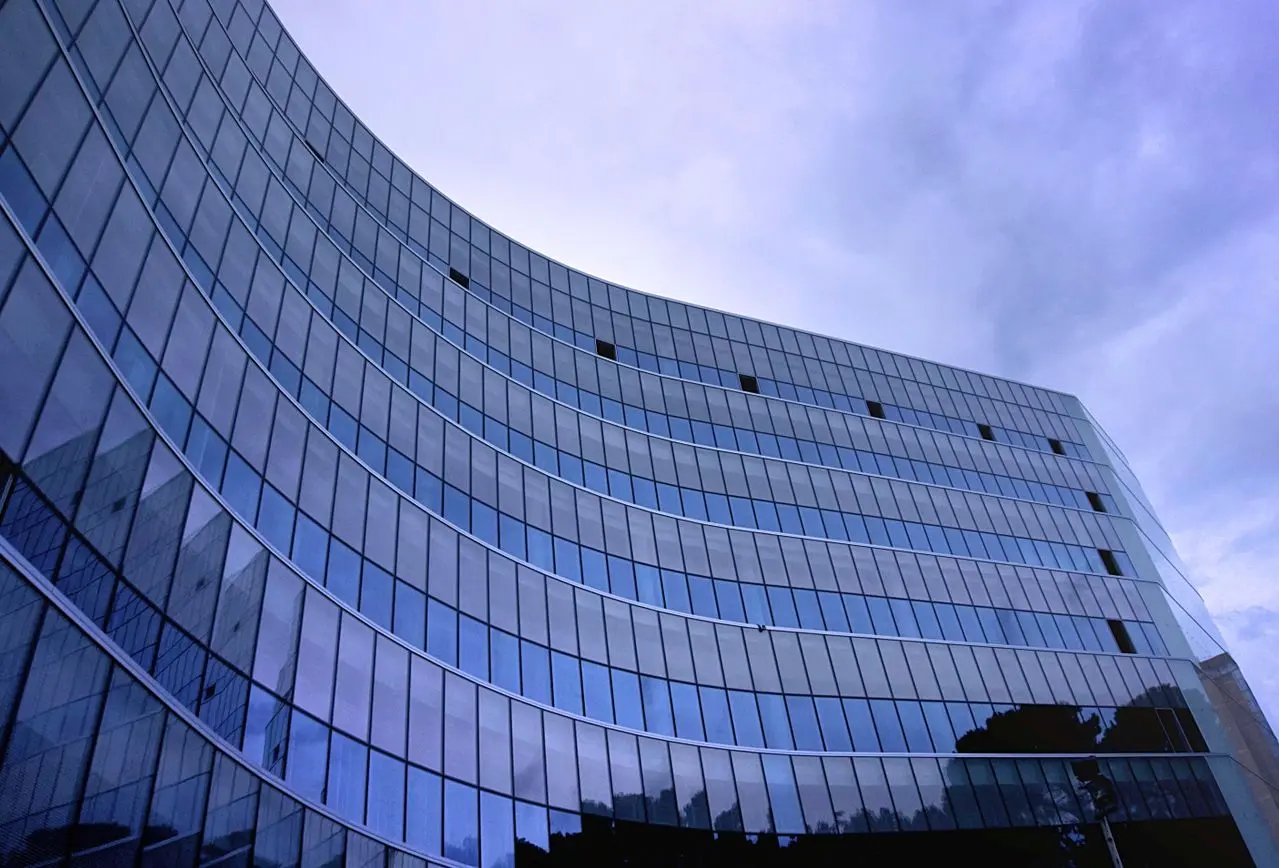
Comparing PVB and SGP Laminated Glass
Both materials are used for laminated glass but for different reasons. Here’s a simple side-by-side comparison in the table below.
| Feature | PVB Laminated Glass | SGP Laminated Glass |
| Strength | Good general strength | Higher stiffness and structural performance |
| Flexibility | More flexible | More rigid |
| Sound Insulation | Strong performance | Good, but not the main advantage |
| UV Protection | Excellent | Good |
| Cost | More affordable | Higher cost |
| Post-Breakage Stability | Good | Better |
| Best For | General safety glazing, windows, doors, acoustic use | Balustrades, facades, structural and high-load applications |
PVB and SGP laminated glasses have different properties, offering a variety of features for different applications. Let's compare them side by side on a few factors:
Strength and Structural Performance
The main differentiator between PVB and SGP is the structural performance.
PVB is ideal for standard windows, doors and skylights, while the greater stiffness of SGP allows the laminated glass to support larger panels with less deflection. This makes SGP the material of choice for structural glazing, high rise buildings and frameless glass systems.
Safety and Impact Resistance
The interlayers both hold the broken glass together, reducing the risk of injury and helping to keep a protective barrier in place.
SGP provides higher strength after breakage, making it a good choice for applications where the glass may need to continue to support loads after impact, such as balustrades, overhead glazing and hurricane-resistant windows.
UV Protection and Sound Insulation
Both PVB and SGP block up to 99% of damaging UV rays to help protect interior furnishings from fading.
PVB has the advantage when it comes to noise reduction. Its versatile interlayer is better at sound absorption, making it a popular choice for homes, hotels, offices, hospitals and schools in busy urban locations.
Weather and Moisture Resistance
The SGP is better suited to harsh outdoor environments because it is highly resistant to moisture and edge deterioration. It is frequently specified for coastal buildings, swimming pool fencing and exterior glazing subject to high humidity.
For most residential and commercial glazing where the glass edges are not exposed to extended moisture PVB is still a good choice.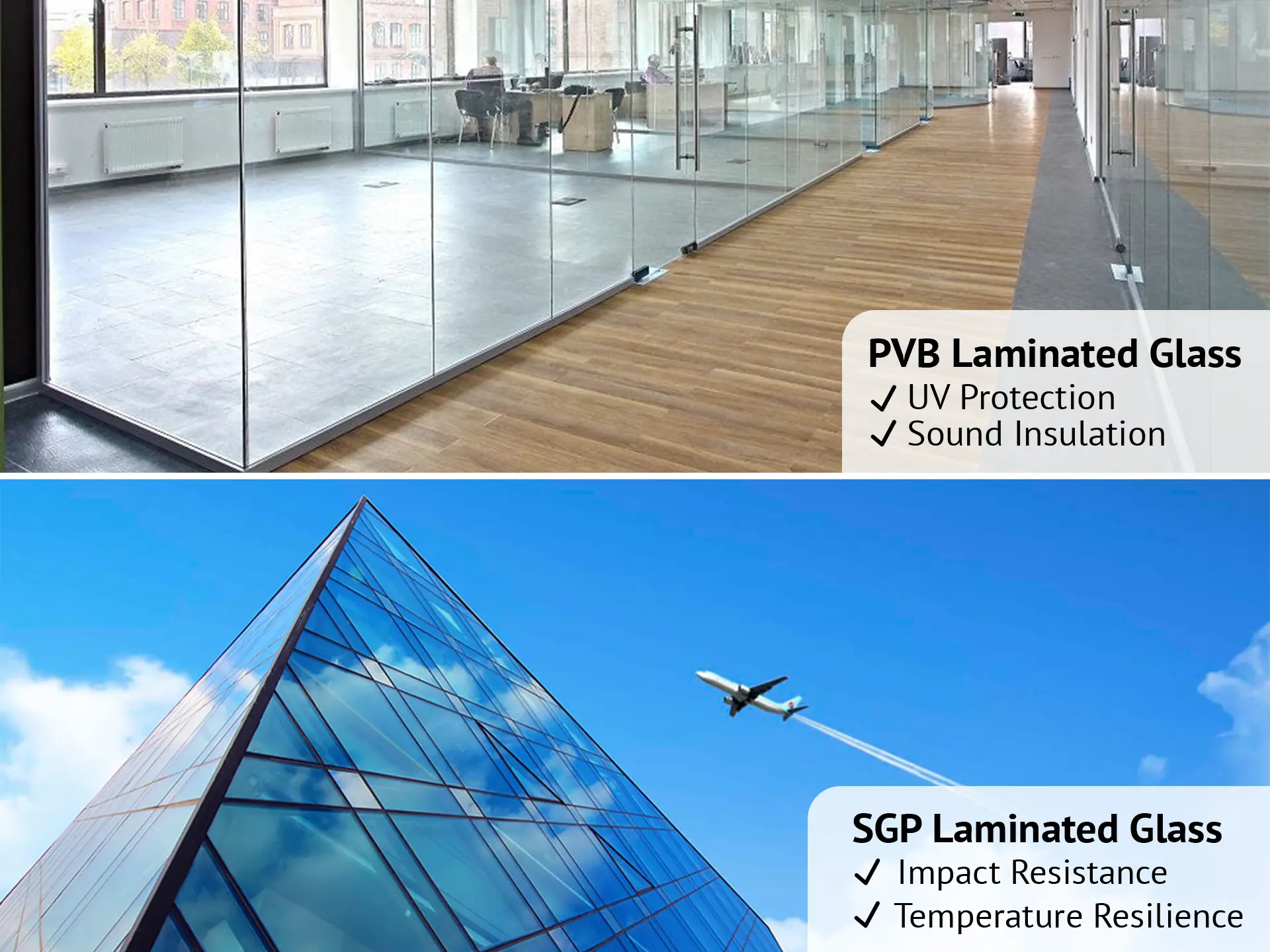
Choosing the Right Laminated Glass for Your Needs
To help you decide between PVB vs SGP laminated glass, you first need to identify the specific goals that your project has. Safety security design preferences, and budget are the main factors that will influence your choice. Here is a brief overview of some major considerations when selecting the right laminated glass for your requirements:
- Determine Safety Aspects: If the glass has to withstand very strongly impacts and guarantee highly safe conditions, for example in vehicles' windows, balcony glass or facilities open to public, choosing laminated glass SGP should be the clear decision as it is much stronger and stiffer.
- Consider Security Requirements: In locations where security is a priority, such as banks, embassies, or high-security buildings, SGP laminated glass offers greater resistance to forced entry, bullets, and explosions.
- Assess Environmental Factors: SGP laminated glass is more suitable in places where the weather is extreme, as it is highly resistant to temperature. However, in situations where sound insulation and UV protection are more important, PVB laminated glass might be a better choice.
- Design & Style: PVB laminated glass allows for more diversified design but it can also host more colors, patterns or different textures. So, if the looks matter and you want to have an exact style of the product made, then PVB should be the best option.
- Budget Considerations: The truth is that PVB laminated glass is more affordable nowadays when compared to SGP laminated glass. So, if you have a fixed budget, go for PVB that besides being a reasonable price also offers features like UV protection and sound insulation already included.
Why Source PVB and SGP Laminated Glass from China?
China is among the world's largest producers of architectural glass and is able to supply top quality laminated glass to residential, commercial and infrastructure projects worldwide.
Some of the benefits of going directly to manufacturers who have been in the business for years include:
- They can offer factory pricing that is quite competitive
- They have a very large selection of glass sizes and specifications
- They are able to do glass customization to suit the needs of your project
- You can get glass that meets international quality standards and is certified
- They have a dependable production capacity for big projects
Whether you are looking for regular PVB laminated glass or premium SGP glass, getting your supply from China can be a good way to save money while keeping the quality of the product.
How Guangzhou Sourcing Can Help
Getting the right manufacturer is only one aspect of the whole procurement process. Quality control, supplier checking, logistics, and technical support play a big role too.
Guangzhou Sourcing supports architects builders developers, and contractors in finding high-quality laminated glass directly from reliable Chinese manufacturers.
Our services include:
- Supplier sourcing and verification
- Factory audits
- Product customization
- Quality inspections
- Shipping and logistics coordination
- End-to-end procurement management
Whether you want PVB laminated glass, SGP laminated glass, or fully glazing solutions, our team is ready to help. Contact Guangzhou Sourcing today to discuss your project requirements and discover how our China Sourcing Turnkey Solution can make your procurement process smoother from factory to project site.
Final Thoughts
Both PVB and SGP laminated glass provide excellent safety, durability and long term performance and the right choice will depend on the specific needs of your project.
For instance, if sound insulation, protection against UV, and safety glazing at an affordable price are your top priorities, then PVB laminated glass is definitely the way to go for many residential and commercial buildings. But, if what you want is a super structurally strong material that is more resistant to moisture and performs better under extreme conditions, then SGP laminated glass should be your choice.
SGP is particularly well suited for high-rise façades, frameless balustrades, swimming pool fencing, impact-resistant glazing, and hurricane-rated prefab houses, where high-performance glazing complements engineered light steel structures designed to withstand strong winds and flying debris.
Understanding the strengths of each interlayer will help you select the laminated glass solution that best balances safety, performance, aesthetics and long-term value for your project.
FAQs
1. Is laminated glass with SGP stronger than with PVB?
Yes. SGP is significantly stiffer than PVB, resulting in laminated glass that can take on greater structural loads with less deflection. This makes it the most preferred choice for structural glazing, glass balustrades and high rise facades.
2. Which gives better sound insulation, PVB or SGP?
Generally, PVB yields better sound absorption as its flexible interlayer can absorb sound vibrations more effectively. So it is usually a preferred solution for residences hotels offices, and buildings situated near busy streets or airports.
3. What kind of interlayer is more suitable for hurricane-resistant glazing?
Due to its higher rigidity and excellent performance even when broken, SGP is the one that is most often chosen for hurricane- and impact-resistant windows. It supports the integrity of the window during the hit of a hurricane and debris thrown by the wind.
4. Is SGP worth the additional cost?
It all depends on the usage of the product. PVB is usually sufficient and economical for normal residential and commercial projects. Then again, if your project involves large glass areas, structural glass elements, or very severe environment, it may be worthwhile to pay more for SGP which will give you better results soon.
5. Does PVB block UV rays? Does SGP block UV rays?
Yes. Both PVB and SGP laminated glass can block up to 99% of harmful UV radiation, helping to protect furniture, flooring, artwork and interior finishes from fading.