
When it comes to creating a bag brand, sourcing from China can provide you with access to a vast array of manufacturers, materials, customization options, and production capabilities. However, once you've found a supplier, that's just the beginning. Successful sourcing of private label bags from China also requires a clear product specification, supplier checks, sample approval, quality control, and a reliable shipping plan.
In this case-study guide, we will guide you through this process from initial product idea to final shipment. At Guangzhou Sourcing, we assist international buyers in managing their supplier sourcing, due diligence, negotiation, quality control, compliance, and logistics, so you can manage your China procurement with a clearer process.
What Are Private Label Bags?
Private label bags are bags that are produced by a manufacturer for your brand and are branded with your design, materials, packaging, and product specifications. The manufacturer produces and you sell the product under your brand.
This model provides you with greater control than just purchasing generic bags from a wholesaler. You can choose the appearance of the bag, the material, the placement of your logo, the packaging, and the features.
For instance, you have a new travel accessories company. You can order a backpack that is the same size, fabric, colors, logo, zipper type, compartments, labels, and packaging as you already have from another supplier, or you can request a backpack with your own.
Some of the most popular private label bag products are
- Handbags
- Tote bags
- Backpacks
- Laptop bags
- Travel bags
- Cosmetic bags
- Crossbody bags
- Shopping bags
- Promotional bags
- Sports and gym bags
The precise customizations vary from factory to factory, materials, production processes, and order needs.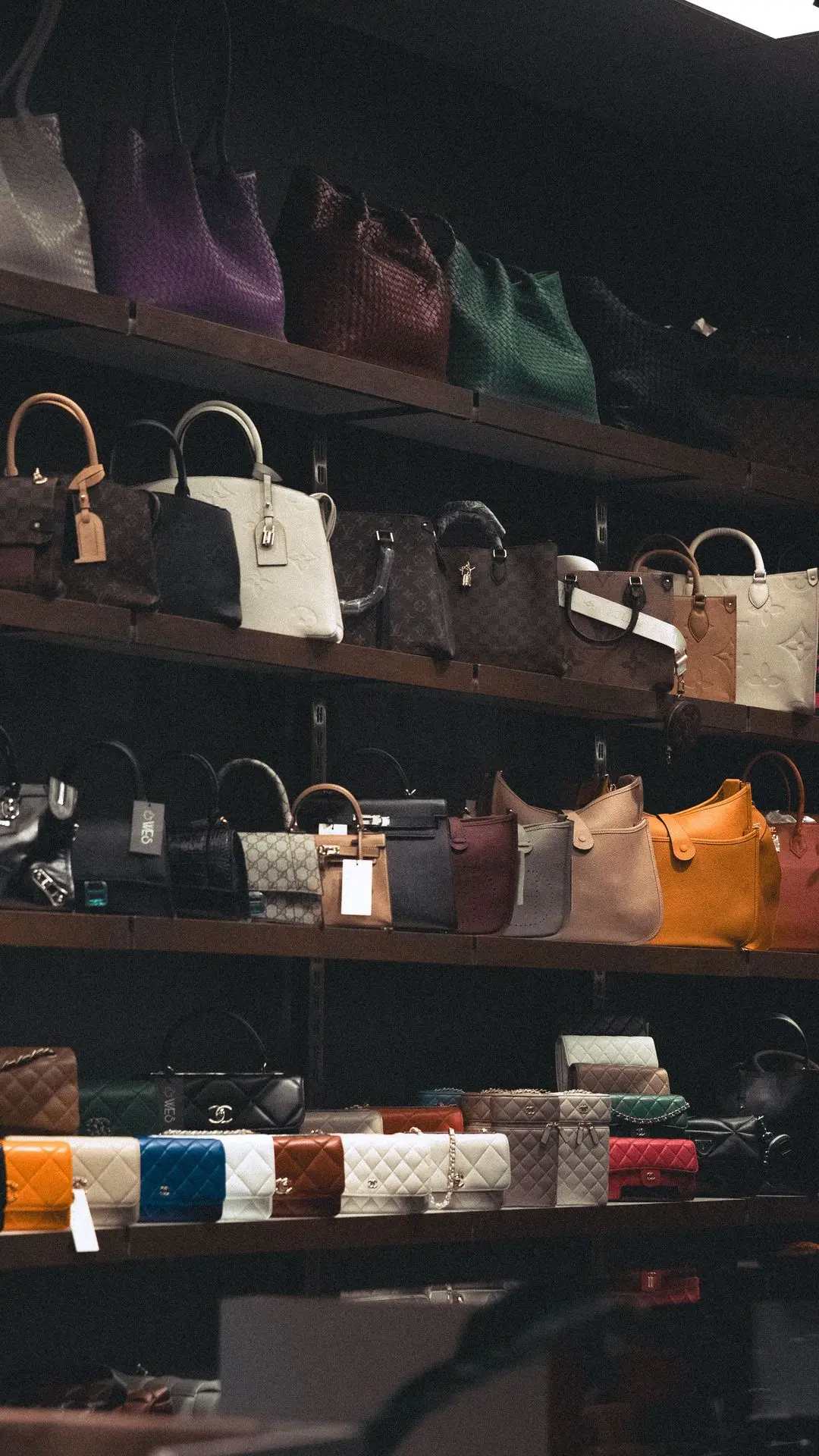
Why Source Private Label Bags from China?
There is a huge manufacturing ecosystem in China, allowing buyers to find various bag materials, designs, parts, customizations, and volumes from the suppliers. But, you need to decide on the supplier based on your product needs and not presume that all Chinese manufacturing facilities are able to offer the same grade.
China also provides buyers with factories that specialize in various fields. For instance, a supplier might specialize in leather items, or another might be in canvas bags, backpacks, promotional items, or fashion accessories.
Let's delve into some of the key motivations for businesses to consider private label bags from China.
Broad Manufacturing Capabilities
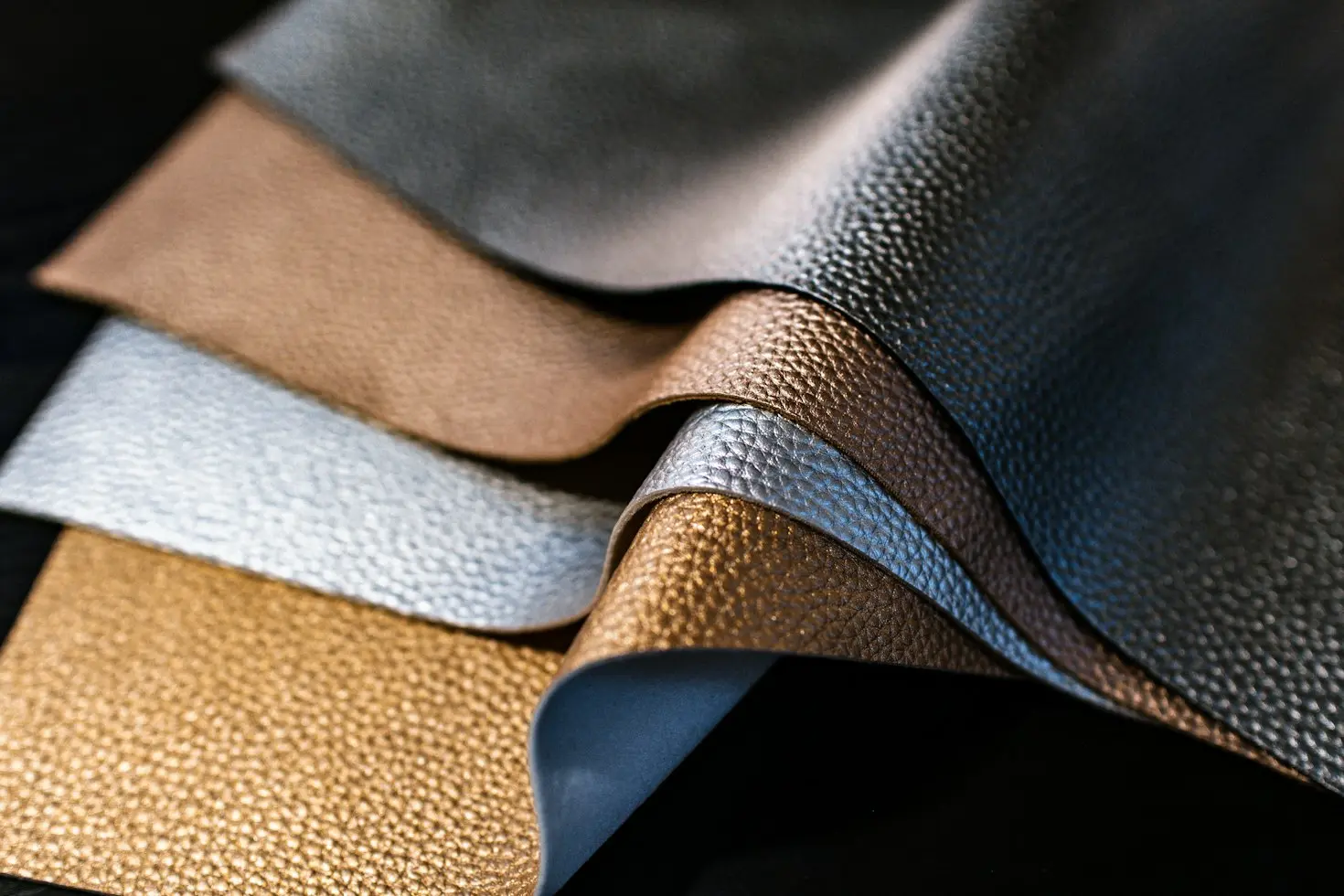
There are manufacturers available that can work with materials like
- PU
- Genuine leather
- Canvas
- Cotton
- Nylon
- Polyester
- Recycled fabrics
Other synthetic or specialty materials are used to make the remaining items.
Other construction, hardware, stitching, linings, handles, straps, and closures can also be requested.
Flexible Customization
There is more than just the logo that can be customized with private labeling.
You may specify:
- Bag dimensions
- Material
- Color
- Logo placement
- Printing or embroidery
- Zippers
- Buckles
- Handles
- Straps
- Interior compartments
- Labels
- Hangtags
- Packaging
For instance, a fashion brand could ask for a particular color of material, a metal plate with their logo lined with their brand, custom zipper pullers, and a dust bag with their brand.
Production Scalability
The supplier you choose should be able to keep up with your needs as your business expands.
You can start with samples and a small volume, and then grow the orders once you are assured of the quality of the products and market demand. Your supplier should know the difference between a sample and the bulk production specification.
Established Supply Chains
The factory that stitches the bag is not the only one that is important for bag manufacturing. The supply chain includes materials, hardware, packaging, printing, labels, and shipping.
A sourcing partner who knows the local suppliers can help to coordinate these different stages and minimize the redundant communication between overseas buyers and factories.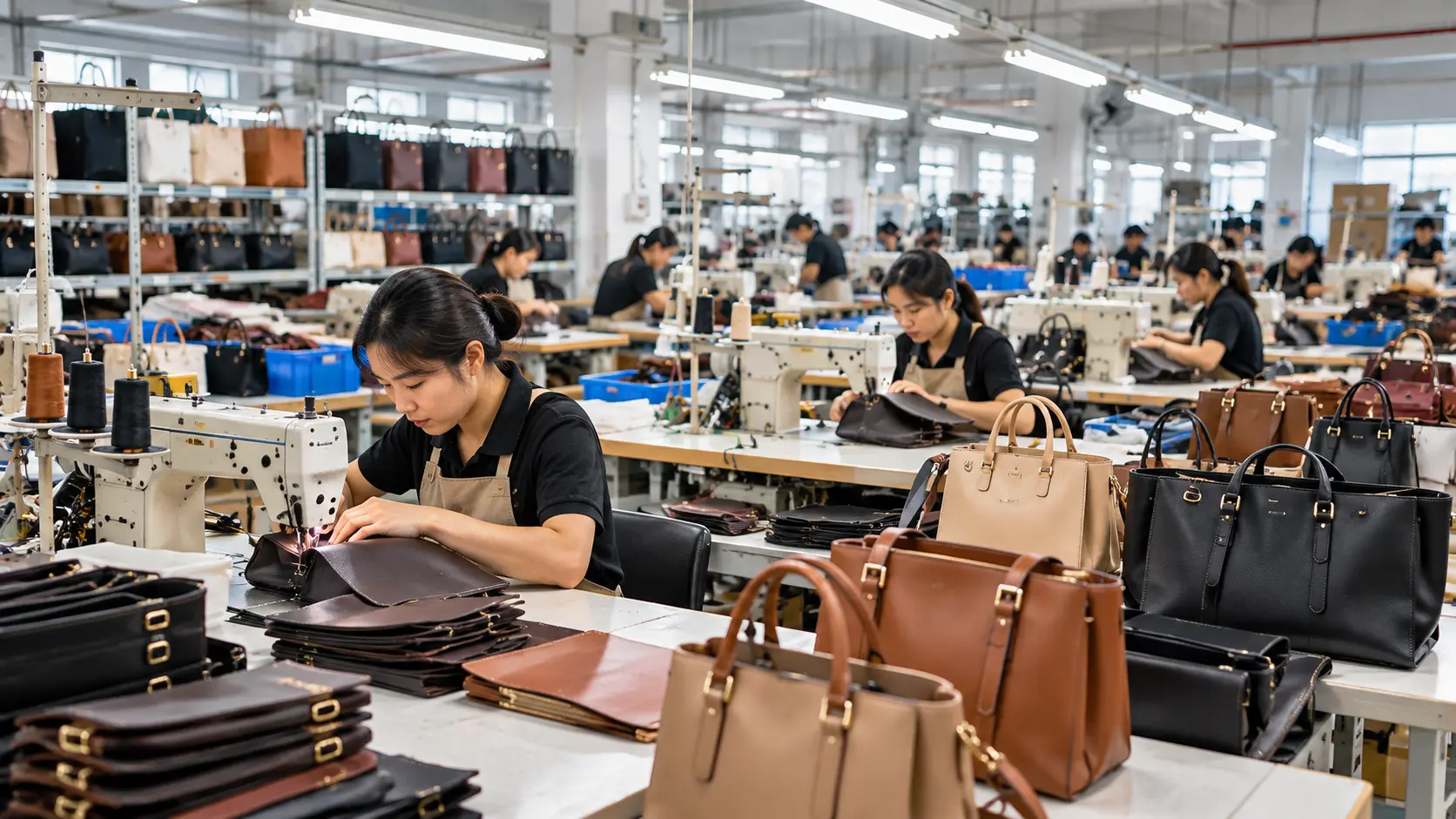
Case Study: Sourcing Private Label Bags in China
The most effective method to tackle private label bag sourcing is to view it as a step-by-step procurement project and not just a "what's your lowest price?" approach to the factory.
The below process is a good example of how a private label bag project can go from concept to production and delivery.
The examples below explain the sourcing process. They are not necessarily a commitment to an undisclosed client project or to a specific price, quantity, or result.
Step 1: Understand the Bag Requirements
Make sure you know what you want to make before you call manufacturers. Clear specifications make it easier for suppliers to quote the same product and for them to compare their offers.
Begin at the beginning:
Requirement | What to Define |
Product Type | Tote, backpack, handbag, travel bag, etc. |
Material | Canvas, PU, leather, nylon, polyester, etc. |
Size | Length, width, height, and thickness |
Color | Pantone/reference color where needed |
Branding | Logo, label, embroidery, printing |
Hardware | Zippers, buckles, rings, closures |
Interior | Pockets, lining, compartments |
Packaging | Polybags, boxes, dust bags, cartons |
Quantity | Target order volume |
Quality | The amount of material and workmanship needed |
Destination | The country and delivery location. |
For instance, if you say, “I need a black laptop bag," a manufacturer still wouldn't know what you're looking for.
A more specific specification would be a black nylon laptop bag with a particular laptop compartment size, padded shoulder strap, 2 internal pockets, branded woven label, custom laptop zipper pullers, and individual packaging.
That level of detail provides the supplier something measurable to quote and manufacture.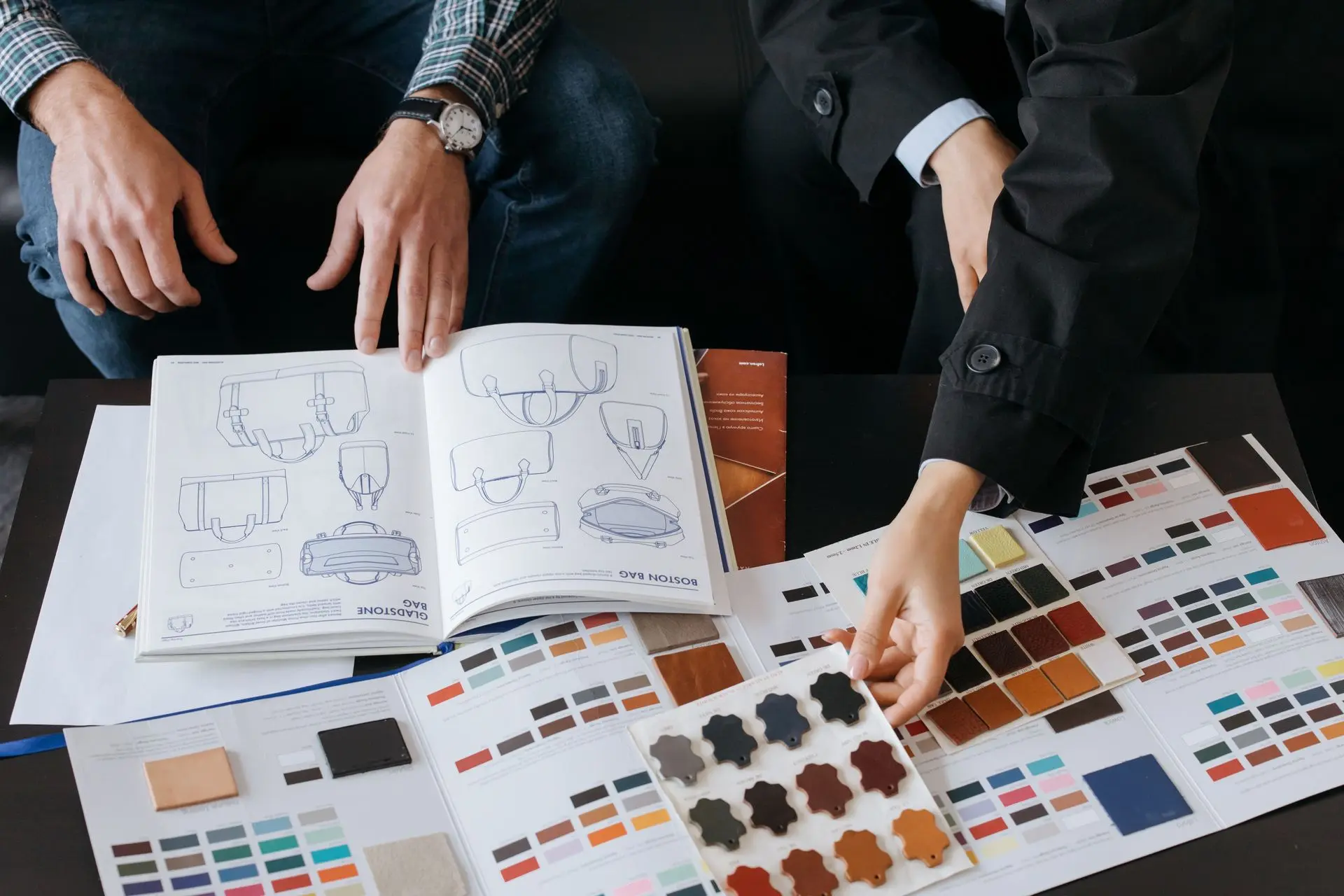
Step 2: Find Suitable Private Label Bag Manufacturers
Your product needs, quality standards, order size, customization options, and target market should align with the right manufacturer.
Don't just call one factory; compare multiple appropriate factories.
At Guangzhou sourcing, we have a database of suppliers and have relationships with factories and other sourcing channels, so we can find out potential suppliers based on the buyer's needs.
The aim is not to get as many factories as possible. The idea is to come up with a list of suppliers that can actually produce your product.
Look at factors such as:
- Product specialization
- Manufacturing capabilities
- Production capacity
- Quality systems
- Export experience
- Certifications where relevant
- Customization capabilities
- Previous product experience
- Communication and responsiveness
For instance, a company that primarily makes promotional low cost bags may not be the best option for your project despite their lower quote, for example, if you're looking for leather handbags.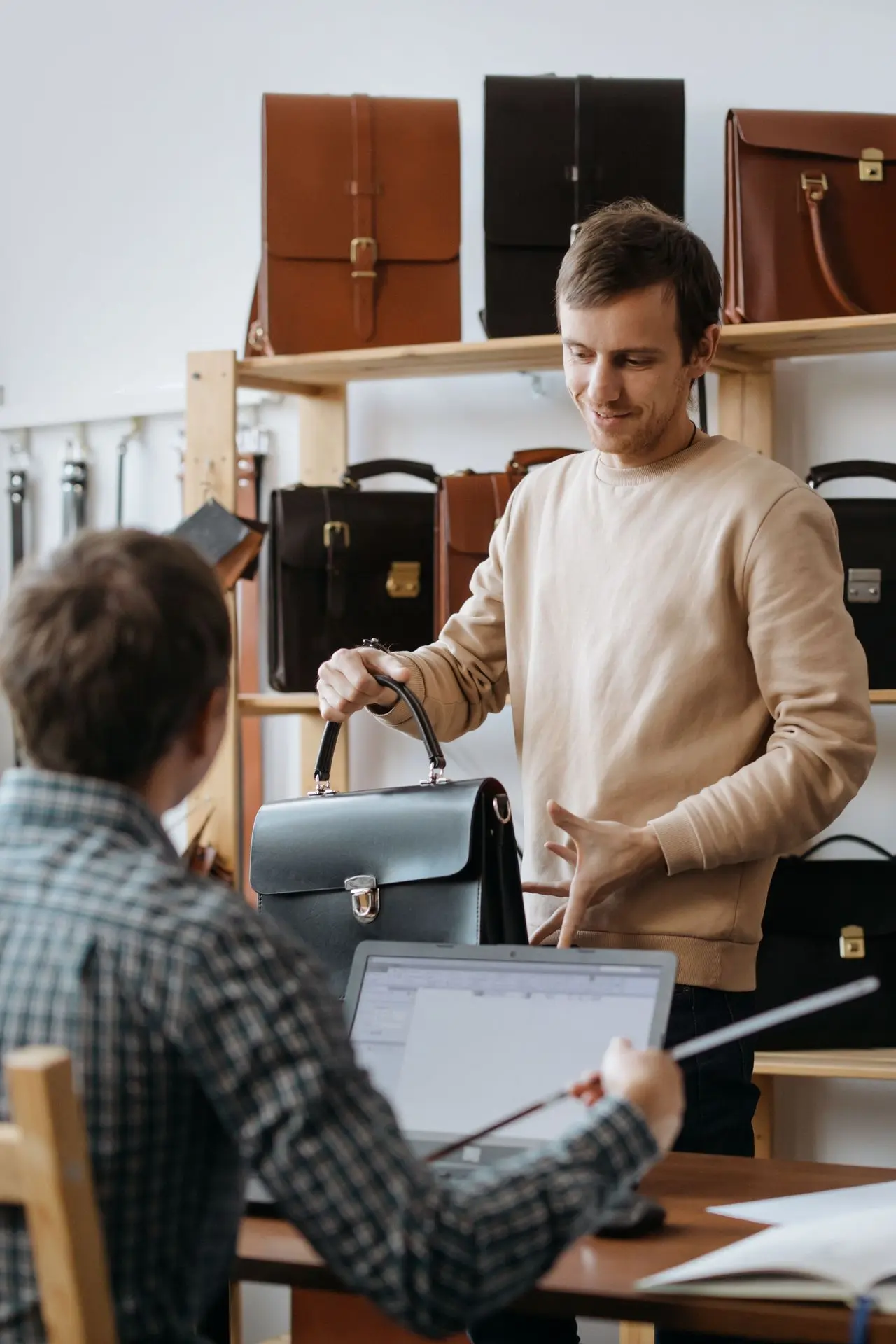
Step 3: Conduct Supplier Due Diligence
Supplier verification is a way to determine if a factory has the business background, facilities, manufacturing capabilities, and history required for your project.
A supplier's online catalog is not the end-all, be-all for a professional sourcing process.
You can check:
- Business information
- Manufacturing facilities
- Production capabilities
- Quality systems
- Export experience
- Relevant certifications
- Business history
- Any previous customer experience (where applicable)
- Reputation and reliability
At Guangzhou Sourcing, we will do supplier due diligence to verify the factory's legal status, facilities, and history according to the buyer's requirements. We also take into account manufacturing capacity, quality systems, compliance and financial strength, past customers and reputation when evaluating our suppliers.
This is important because a supplier may display appealing product images but not have the production capacity that you require.
Step 4: Compare Quotes and Negotiate Terms
Don't just go for a bag manufacturer with the lowest price per unit. Make a comparison with the full offer, specifications, MOQ, quality requirements, payment terms, packaging, delivery and other costs.
When checking quotes, inquire if the same product is being quoted by all suppliers.
Check:
- Unit price
- Minimum order quantity
- Material specification
- Customization charges
- Sample cost
- Packaging cost
- Tooling/setup costs
- Payment terms
- Trade terms
- Production schedule
- Quality requirements
- Shipping arrangements
We compare the offers from suppliers and discuss with them items like price, payment terms, trade terms, AQL, etc., at Guangzhou Sourcing. Local market knowledge also helps us to determine if the quotations are reasonable for the product mentioned.
Expert Tip
If one factory quotes considerably less than the others, ask them why.
The difference could be due to:
- A cheaper material
- Different hardware
- Thinner fabric
- Simpler packaging
- Lower quality requirements
- Different shipping terms
- An alternate understanding of your requirements
The lowest quote isn't necessarily the cheapest overall.
Step 5: Review and Approve Samples
Always check a sample before approving bulk manufacture, as the sample will enable you to determine if the manufacturer's interpretation is correct for your needs.
A sample gives you the opportunity to examine:
- Material quality
- Color
- Dimensions
- Stitching
- Logo placement
- Zippers
- Hardware
- Handles
- Straps
- Lining
- Compartments
- Overall construction
For instance, you can have a logo 5 cm from the top edge of your design. The factory can adjust the specification before mass production if it is set too high on the sample.
The approved sample should then be used as a clear reference for the bulk order.
This is a simple step that can avoid a little design misunderstanding to become a big production problem.
Step 6: Place the Order and Document the Requirements
After the supplier and sample are approved, record the final specifications in the purchase agreement and order documents.
Your contract should specifically name:
- Product specifications
- Approved sample
- Quantity
- Unit price
- Payment terms
- Production deadline
- Quality requirements
- Packaging requirements
- Shipping terms
- Inspection requirements
- Quality problem procedures
At Guangzhou Sourcing, we have contracts with the suppliers that are based on Chinese law and have clauses that set out the expected quality and delivery requirements.
The more you can make the agreement clear, the less room for misunderstanding you have.
Step 7: Monitor Production and Quality
Quality control should begin prior to the finished bags being shipped. By monitoring production, you can spot issues before the factory has a chance to make a mistake.
Quality checks can include a review of:
- Raw materials
- Fabric or leather
- Color
- Dimensions
- Stitching
- Logo placement
- Hardware
- Zippers
- Functionality
- Packaging
- Finished quantity
At Guangzhou Sourcing, we set up clear specifications with suppliers and conduct multi-stage quality inspection from raw materials to final products. Checks are also carried out prior to shipment, ensuring that products meet agreed requirements as part of our process.
- For instance, if an inspection discovers the wrong placement of the logo during the production process, the factory can fix the problem before the whole order exits the works.
That provides you with a lot more control than finding out about the issue after the shipment has reached another country.
Step 8: Manage Shipping and Logistics
Once the bags are produced and inspected, you have to get the product bags safely and efficiently from the factory to your destination.
Your logistics plan can include:
- Factory pickup
- Warehousing
- Consolidation
- Export coordination
- FCL shipping
- LCL shipping
- International freight
- Final delivery
At Guangzhou Sourcing, we arrange logistics and shipping based on agreed trade terms, and we can handle FCL and LCL shipping. We can also offer warehousing and consolidation services for appropriate sourcing projects.
- For instance, if you're buying various products from multiple Chinese suppliers, you can consolidate your orders so that you don't have to send each supplier's product individually.
What Should You Specify When Ordering Private Label Bags from China?
Before requesting a final quotation, materials, size, construction, brand, hardware, packaging, quantity, quality requirements, and delivery requirements of the bag should be determined.
Having a full product specification makes it easier to compare suppliers.
Material
Specify to the supplier the type of material you want.
For example:
- Canvas
- Cotton
- Nylon
- Polyester
- PU
- Leather
- Recycled fabric
Don't use words like “premium material” without clarifying what premium is for your product.
Bag Dimensions and Construction
Specify:
- Length
- Width
- Height
- Thickness
- Weight where relevant
- Number of compartments
- Pocket sizes
- Handle length
- Strap type
- Closure type
The size discrepancy can alter the amount of material used and the final price of the product.
Branding
Your branding specification can include:
- Logo
- Logo size
- Logo position
- Printing method
- Embroidery
- Woven labels
- Metal logo plates
- Hangtags
- Interior labels
If your brand has strict colors, supply a color reference in addition to a screen image.
Hardware and Accessories
Be sure to include small parts.
Specify:
- Zippers
- Buckles
- D-rings
- Magnetic closures
- Pullers
- Metal fittings
- Buttons
- Strap adjusters
These details can make a significant difference in the look and lifespan of the final product.
Packaging
Determine the method of delivery to your customer.
You may need:
- Individual polybags
- Branded dust bags
- Branded boxes
- Hangtags
- Cartons
- Shipping labels
Packaging should also be consistent with the product positioning. Packaging for a high-end purse can be vastly different from a giveaway tote.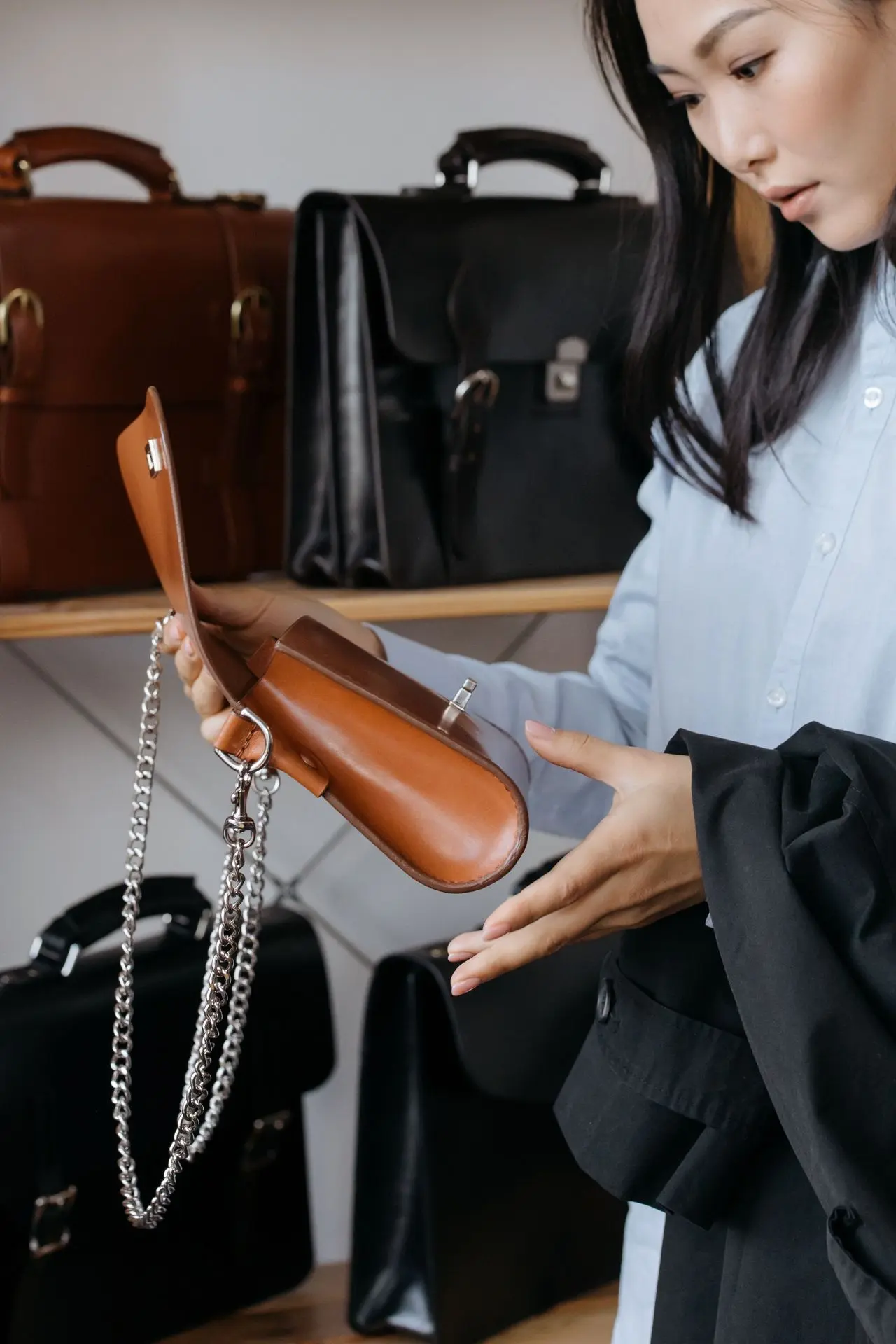
How Much Do Private Label Bags from China Cost?
The private label bags from China are not fixed, and the price will be determined by the material, design, customization, quantity, packaging, quality requirements, and shipping.
When a product is displayed with two bags, they may be vastly different in manufacturing cost.
Some examples include changing from the basic polyester to leather, adding extra hardware, increasing the bag size, adding more compartments, and special packaging.
Cost Factor | Why It Matters |
Material | Different materials have different costs. |
Size | The bigger the bag, the more material that is needed. |
Design | If the construction is complex, it can increase the labor. |
Branding | Cost of custom printing, embroidery, or hardware |
Hardware | High quality zippers and fittings can add to the cost. |
MOQ | The supplier's quotation may be influenced by the order volume. |
Packaging | Custom boxes and bags come at additional expense. |
Sampling | Development charges may be required for custom samples. |
Quality control | Additional inspections can add project costs. |
Expert Tip: Take into account the total landed cost, not just the factory unit cost.
What Is the Difference Between Private Label and Generic Bags?
The private label bags are marked with your brand and are created to your requirements, whereas the generic bags are typically regular products that a supplier produces.
Feature / Aspect | Private Label Bags | Generic Bags |
Branding | Your branding | Standard branding or no branding |
Specifications | Custom specifications | Existing specifications |
Packaging | Custom packaging possible | Standard packaging |
Control & Customization | Greater product control | Less customization |
Best Used For | Improved fit to build a brand | Good for easy resale |
For instance, if you wish each bag in your collection to share the same logo, colors, packaging, and design language, then private labeling provides you with more control over that brand experience.
What Are the Biggest Risks When Sourcing Private Label Bags from China?
The greatest risks are lack of specifications, lack of quality, material changes, brand misprints, manufacturing delays, hidden costs, and shipping issues.
Many of these risks can be mitigated by establishing clear specifications and a structured sourcing process.
Inconsistent Product Quality
A sample can appear good, and bulk production can be different.
Use an approved sample and measurable quality requirements as production reference.
Material Substitution
The supplier may have a different understanding of a vague material description than you do.
Indicate the type of material, grade, thickness, composition, color, etc.
Incorrect Branding
A logo may be misplaced, mis-sized, mis-colored, or of a different material.
Agree on branding information prior to production.
Production Delays
In a factory, several orders are processed simultaneously.
Establish a production schedule and track progress rather than waiting for the anticipated production date.
Unexpected Costs
Request suppliers to specify all the costs before you place the order.
Review sampling, customization, packaging, tooling, local charges, freight and other costs that may apply.
Shipping Problems
Schedule shipping prior to production completion.
Ensure that the trade terms, means of transport, documents, destination and commitments of both parties are confirmed.
How We Can Help With Private Label Bags in China
You don't have to handle all the factory contacts remotely, as a sourcing partner can handle supplier identification, supplier checks, negotiations, quality control, production monitoring and logistics.
At Guangzhou Sourcing, we work as an on-the-ground sourcing and project-management partner for international buyers. We can help you with supplier sourcing, supplier evaluation, negotiations, purchasing support, quality control, and end-to-end shipping coordination.
Some of the things we do are
- Knowing what kinds of products you need
- Identifying suitable suppliers
- Evaluating factories
- Asking for and comparing quotes
- Negotiating commercial terms
- Coordinating samples
- Monitoring production
- Conducting quality inspections
- Planning shipping and logistics
We also offer warehousing and consolidation services for appropriate projects. We are now offering logistics services with storage and consolidation where applicable, to make multi-supplier shipments easier.
The main benefit is not simply having another person contact a factory. A structured sourcing process provides you with a more transparent approach to handling product specifications, supplier interaction, quality, cost, and delivery.
Private Label Bags China: A Practical Sourcing Checklist
Ensure that you have confirmed the product, supplier, quality, commercial and logistics details before placing your order.
Use this checklist:
- Product type confirmed
- Material specified
- Dimensions confirmed
- Colors approved
- Logo design approved
- Branding method confirmed
- Hardware specified
- Packaging confirmed
- Quantity confirmed
- MOQ understood
- The supplier was evaluated.
- Quotation compared
- Sample approved
- Quality requirements documented
- Production schedule confirmed
- Contract signed
- Inspection arranged
- Shipping terms confirmed
- Export documents prepared
- Delivery plan confirmed
While this checklist may seem straightforward, it includes many of the details that can be issues when buyers jump into production.
Sourcing Private Label Bags in China: Key Takeaways
When it comes to sourcing private label bags in China, it's not just about finding a factory with an appealing quotation. This requires clear specifications, a proper manufacturer, and a supplier. verification, sample approval, documented quality requirements, production monitoring, and a practical shipping plan.
The proper procedure also makes it easier to make a more fair comparison of suppliers. When you're not just asking, “Who can sell me the cheapest product?” you can ask, “Which supplier can provide us with the product, quality, quantity, timeline and commercial requirements?”
At Guangzhou Sourcing, we assist international buyers in handling the China sourcing process, including supplier identification, supplier due diligence, supplier negotiation, quality control, compliance support, and logistics coordination. When you want to buy private label bags from China, you can contact us about your product information, quantity and needs, and we will discuss the steps you need to take in your sourcing project.
FAQs
How do I find private label bag manufacturers in China?
Private label bag manufacturers can be located via supplier databases, sourcing networks, trade channels, referrals and professional sourcing partners. Next, consider each supplier in terms of manufacturing capacity, experience with your product, quality systems, export experience, and their ability to meet your requirements.
Once you locate a factory, the next step is to find it. You will still have to check if that factory is appropriate for your project.
What is the MOQ for private label bags in China?
Private label bags have no fixed MOQ; each manufacturer has its own MOQ requirements, which depend on the product, material, customization, production process, and order quantity.
A basic bag might require something different than a highly customized bag that contains special hardware and packaging.
When you are ordering a design, always ask the factory for MOQ confirmation, not the MOQ value that is displayed on the website.
Can I customize bags with my own logo and packaging?
Yes, many private label manufacturers will be able to customize the logo, labels, packaging, colors, hardware, materials and other product details depending on their capabilities.
When ordering, make sure the factory can offer the exact customization you are looking for and ask for a sample if the branding will impact the final product.
How do I check the quality of private label bags from China?
Always begin with a detailed specification and an approved sample and production monitoring and quality inspections to ensure that the bulk order meets the requirements.
Look for material, size, stitching, color, logo positioning, hardware, zippers, usability, and packaging.
At Guangzhou Sourcing, we employ quality specifications and multi-stage inspections to help ensure that products meet agreed requirements prior to shipment.
Can a China sourcing agent manage private label bag production?
Yes, a sourcing partner can take care of the supplier selection, evaluation of factories, negotiation, sample development, production monitoring, quality control, and logistics.
Specific services will vary based on the sourcing company and project. Having a full service sourcing solution can be handy when you have to work with multiple suppliers or need local assistance during manufacturing.