
So, you've finally found the right toilet. It's sleek, it's water-efficient, and it fits your aesthetic perfectly. But before you click "buy," there is one technical detail that can make or break your bathroom renovation: the trap.
When it comes to plumbing, choosing between a P-Trap and an S-Trap isn't a matter of style; it's a matter of where your waste goes. If you don't do it right, you'll have to deal with a very costly plumbing problem.
Here is everything you need to know to choose like a pro.
Understanding the Difference
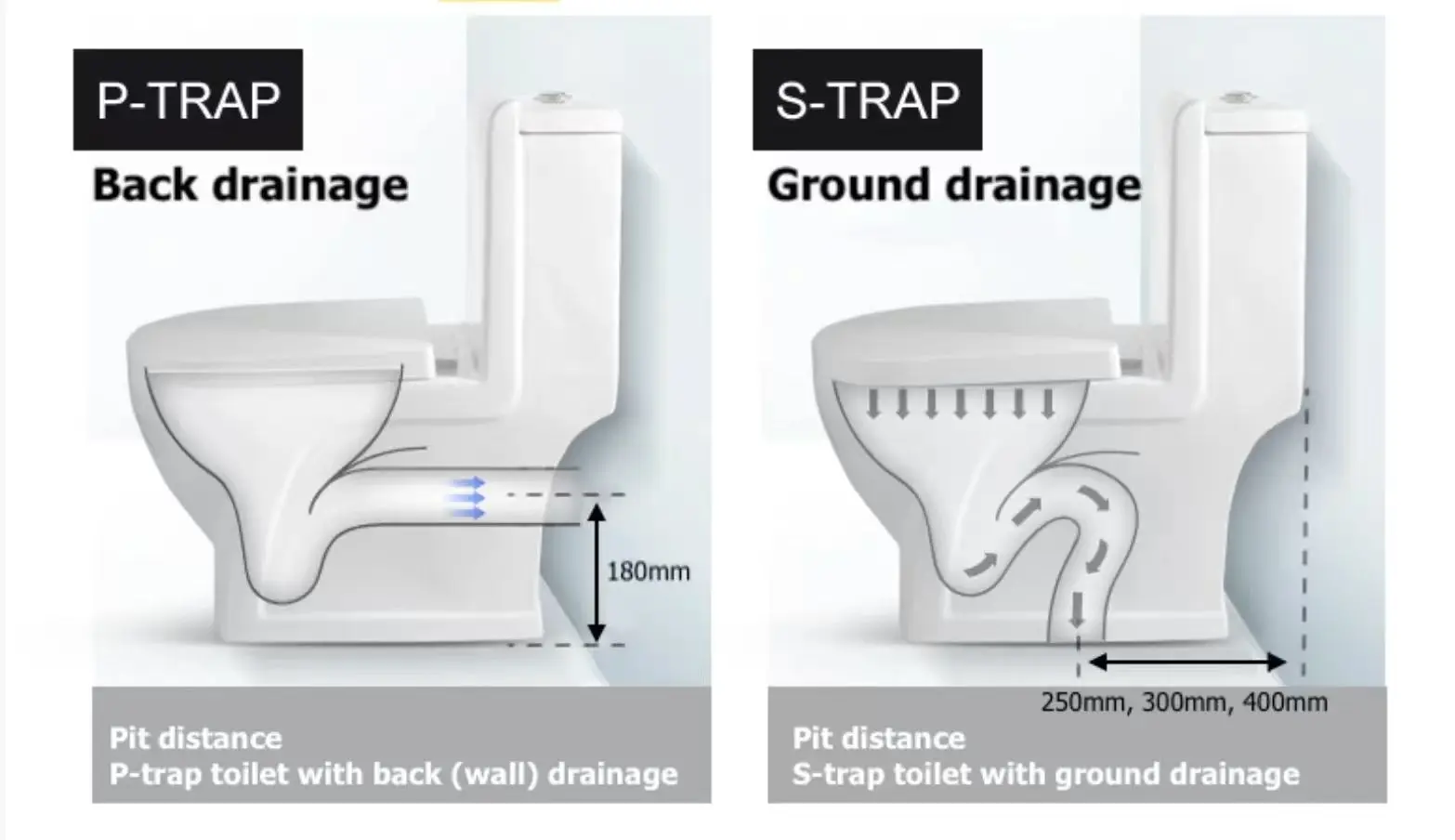
Both S-trap and P-trap toilets serve the same purpose: they safely get rid of waste and keep sewer smells from getting into the bathroom. The main difference is where the pipe for the waste connects.
- S-trap toilets send waste out through the floor. The pipe bends down in a "S" shape and goes straight to the floor drain.
- P-trap toilets send waste out through the wall behind the toilet. Before going into the wall, the pipe bends horizontally to make a "P" shape.
When to Use an S-Trap Toilet
S-trap toilets are common in bathrooms where the plumbing runs under the floor slab. A lot of people in Asia, Australia, and the Middle East use them.
Choose an S-trap if:
- Your waste outlet is in the floor.
- You are replacing an existing floor-outlet toilet
- Your pit distance matches standard sizes (usually 250mm, 300mm, or 400mm)
Pros and Cons of S-Trap Toilets
Pros
- Ideal for floor drainage systems
- Common in many regions (Asia, Australia, Middle East)
- Easy replacement for existing S-trap toilets
Cons
- Can be more prone to siphoning if poorly vented
- Less common in modern building codes
When to Use a P-Trap Toilet
P-trap toilets are typical in modern buildings where plumbing is concealed inside walls, often seen in Europe and North America.
Choose a P-trap if:
- Your waste outlet is located in the wall
- You are working with wall-mounted or concealed plumbing
- Your drainage rough-in height aligns with the toilet specification
Pros and Cons of P-Trap Toilets
Pros
- Preferred in modern plumbing systems
- Better venting reduces siphon risk
- Common in Europe and North America
Cons
- Requires wall drainage
- Not suitable for floor outlet plumbing without modification
Is One Better Than the Other?
Neither trap is better for performance or hygiene. Flushing efficiency, water use, and durability depend more on toilet design and manufacturing quality than on trap type. The most important factor is choosing the trap that matches your existing plumbing.
A Simple Rule to Remember
- Floor drainage = S-trap toilet
- Wall drainage = P-trap toilet
Before purchasing a toilet, always confirm the drainage location and measure accurately. Making the right choice from the start saves time, avoids installation issues, and keeps your bathroom project running smoothly.
Frequently Asked Questions
Can you replace an S-trap toilet with a P-trap toilet?
Yes, but only if the plumbing is modified. An S-trap connects to floor drainage, while a P-trap connects to wall drainage. Converting from one to the other usually requires relocating the waste pipe, which may involve floor or wall work. Always consult a plumber before making the switch.
How do I know if my toilet is S-trap or P-trap?
Check where the waste pipe exits. If the pipe goes straight down into the floor, it's an S-trap toilet. If it exits horizontally through the wall behind the toilet, it's a P-trap. Measuring the pit distance or rough-in size can also help confirm the trap type.