
China has always been a major force in manufacturing worldwide, making things as diverse as electronics and energy-saving building materials. Now the country is also very well-known for making architectural products, and among other things, a quite outstanding category of products in which the Chinese suppliers beat their competitors is staircase fabrication.
Whether you plan to build a boutique hotel, a modern villa, or a large-scale residential development, sourcing stairs from China can give you great design flexibility, help you maintain a consistently high quality level, and at the same time allow you to save a lot of money. Here are the reasons why China has become a favorite place for architects, builders, and developers when they need new staircase systems, as well as tips on how you can source these products there correctly.
Why Source Staircases from China?
The staircase industry in China is known for its superior manufacturing and wide range of design alternatives. The country's factories have the latest machines and are run by qualified engineers who make stair systems that are perfectly made and ready to be shipped around the world.
Here are the primary advantages:
1. Competitive Pricing
Cost-effectiveness is one of China's best features. Manufacturers may offer pricing that are often 40–60% lower than similar suppliers in Europe or North America because they have a lot of manufacturing capacity, automated processes, and access to cheap materials. They can do this without sacrificing the quality of the design or the strength of the structure. This makes it very enticing for contractors with restricted budgets to buy from China.
2. Wide Variety of Styles and Materials
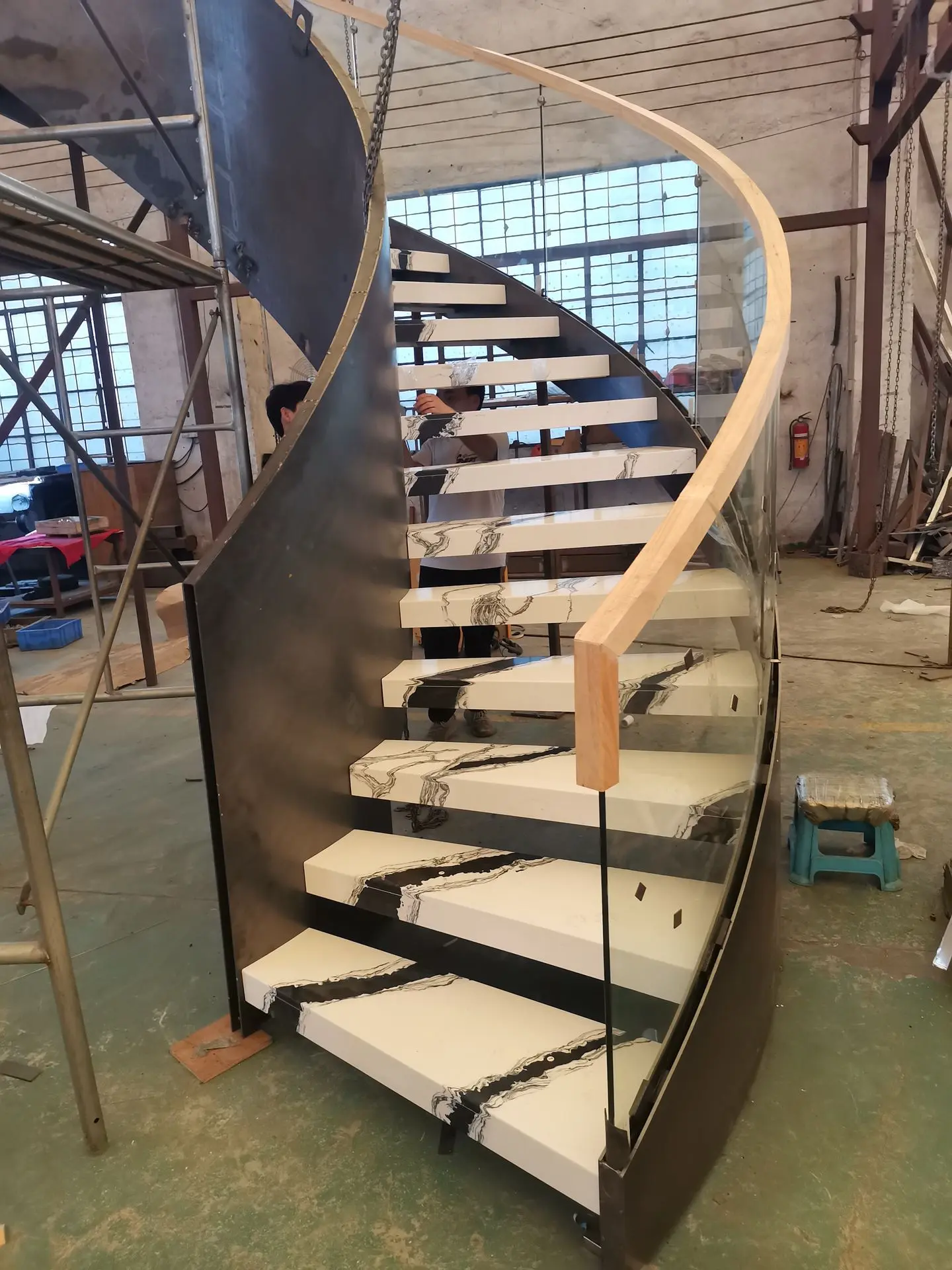
Chinese manufacturers are capable of making basically any staircase design you might imagine. They can manufacture simple floating staircases or big helical and spiral staircases. The different styles, use of space, and the visual or tactile characteristics of the staircases are the main points that suppliers are focusing on.
Typically, a factory uses architectural diagrams to create pieces not only harmonizing with the interior design of the project but also standing out in their uniqueness whether it's a seaside hotel, a loft-style flat, or a luxury home.
Major style categories are, for instance:
- Straight stairs, which fit well in small residential or office areas
- L-shaped and U-shaped staircases that are space-efficient
- Floating staircases with glass or steel details for a contemporary look
- Spiral staircases as a combination of art and functionality
3. Strong Engineering and Craftsmanship
Chinese factories rely on machines such as CNC cutters, welding robots, laser systems to produce parts that are extremely accurate. However, these staircases are largely the result of the skill of the craftsmen the carpenters, welders, and fitters not only achieve the exacting requirements but also create smooth surfaces and high-quality, long-lasting products.
4. Export Experience
China's top staircase makers know global building rules and export demands. They carry ISO, EN, or ASTM badges. Logistics staff manage international shipping, packaging, and papers daily. First-time buyers get steady results without surprises.
Types of Staircases and Materials to Explore
First of all, it is good to know which type of staircase as well as what kind of materials are suitable for your project before making any inquiries. This will help you figure out the style of your house as well as your budget.
Popular Staircase Types:
1. Straight Staircases
Best For: Homes, offices, and stores
Common Materials: Wood, steel ang glass
Advantages: Clean design, short installation time, availability of modular designs
2. L-Shaped and U-Shaped Staircases
Best For: Homes, hotels, or apartment buildings
Common Materials: Stainless steel combined with wooden steps or glass panels with metal supporting parts
Advantages: Saves space, secure, and nice-looking
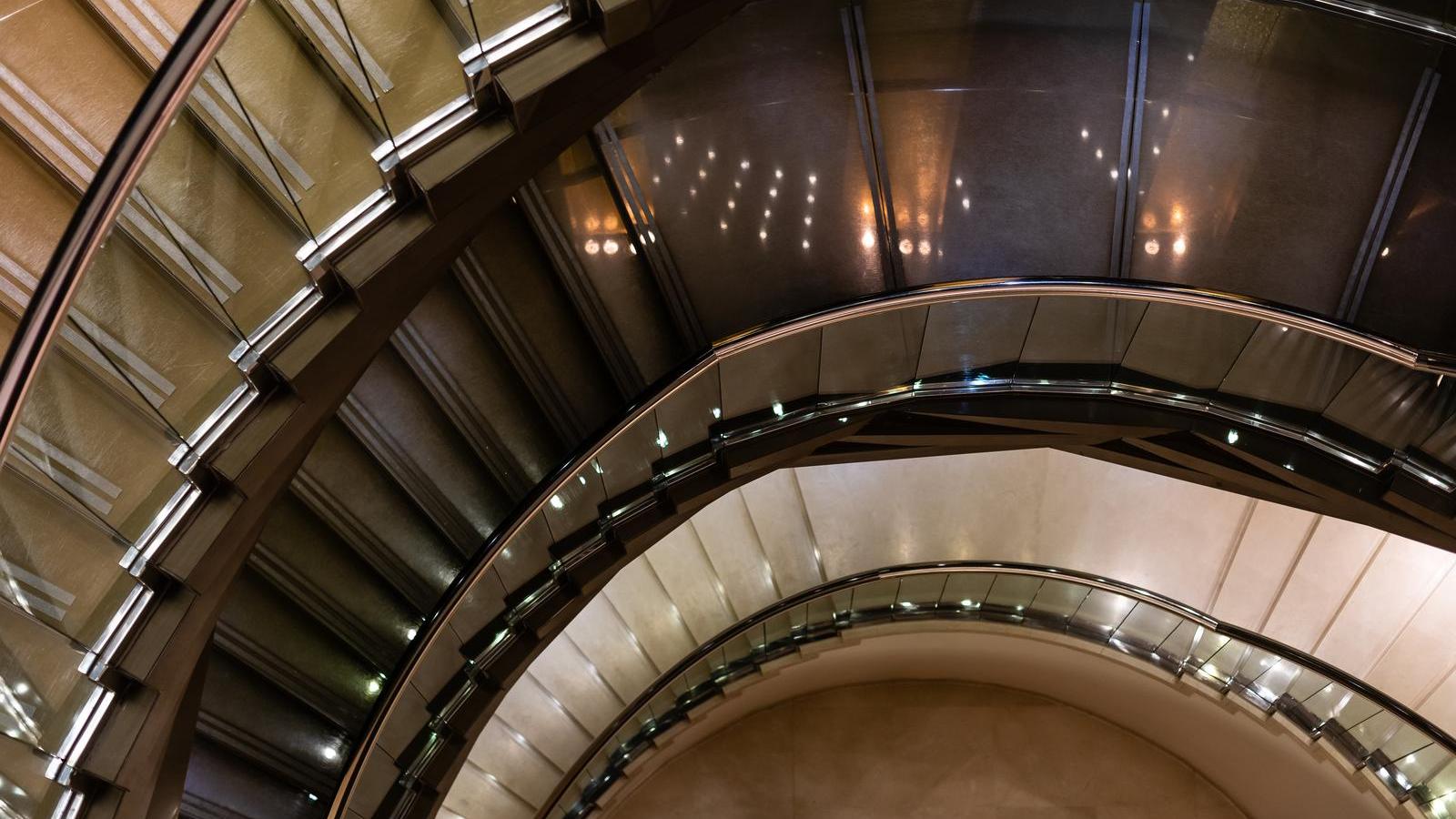
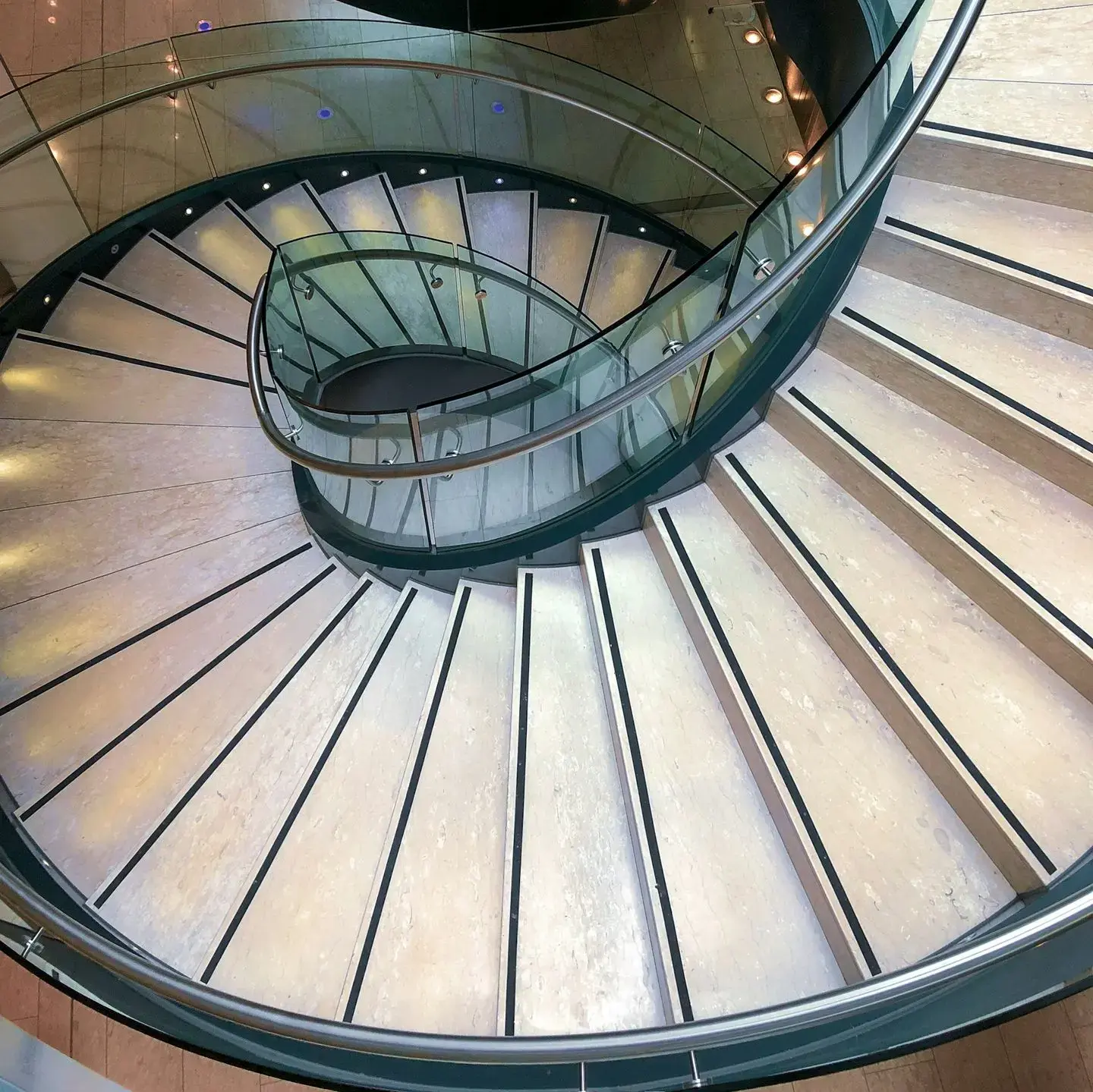
3. Spiral and Helical Staircases
Best For: Showrooms, villas, lobbies
Common Materials: Wrought iron, carbon steel, or glass
Advantages: Eye-catching visuals, perfect for small spaces
4. Floating Staircases
These futuristic designs look like they "float" off the walls, which gives the room a feeling of space.
Best For: Contemporary architectural styles and boutique interiors
Common Materials: Steel structures joined with glass or oak steps
Advantages: A minimalistic look with excellent structural strength
5. Modular and Prefabricated Staircases
Prefabricated models are pre-engineered and easy to assemble, perfect for large-scale residential or industrial projects.
Best For: Developments with tight construction timelines
Common Materials: Aluminum, composite, or galvanized steel
Advantages: Quick installation, uniform quality, minimum on-site labor costs
Key Materials Used in Stair Manufacturing
Selecting suitable materials will establish quality of the product, keep visual aspects of the product consistent, and ensure the product area is safe.
1. Steel: Strong and flexible at the same time, steel is the best choice for commercial buildings and outdoor stairs.
2. Stainless Steel: Since it does not rust, it is appropriate for houses and other buildings with a modern style or in coastal areas.
3. Glass: Generally a material for designs that are modern, aiming at transparency and allowing more light inside.
4. Wood: Offers a cosy atmosphere and a sense of the outdoors; it is mainly a material chosen for homes and small hotels.
5. Aluminum and Composite: Having the advantage of being light, yet very strong, they correspond well with outdoor and modular applications.
Explore Our Staircase Catalogs
Browse our staircase collections, including steel, custom, and architectural staircase solutions sourced from Chinese manufacturers.
Major Staircase Manufacturing Hubs in China
Different provinces are known for making stairs, and each one has its own area of expertise:
- Foshan, Guangdong: makes modern glass and stainless steel steps, plus luxury custom work.
- Zhejiang Province: does tight steel frames and artistic wrought iron.
- Jiangsu Province: builds fancy architectural parts and floating stair systems.
- Shandong Province: chews through big orders at low cost - perfect for volume projects.
Each place has a different edge, Shandong keeps prices down, Foshan gives top-tier finishes. Buyers pick based on what matters most to their project.
Factors to Consider When Sourcing Staircases in China
When you buy a staircase, keep the following things in mind to make the purchase goes well.
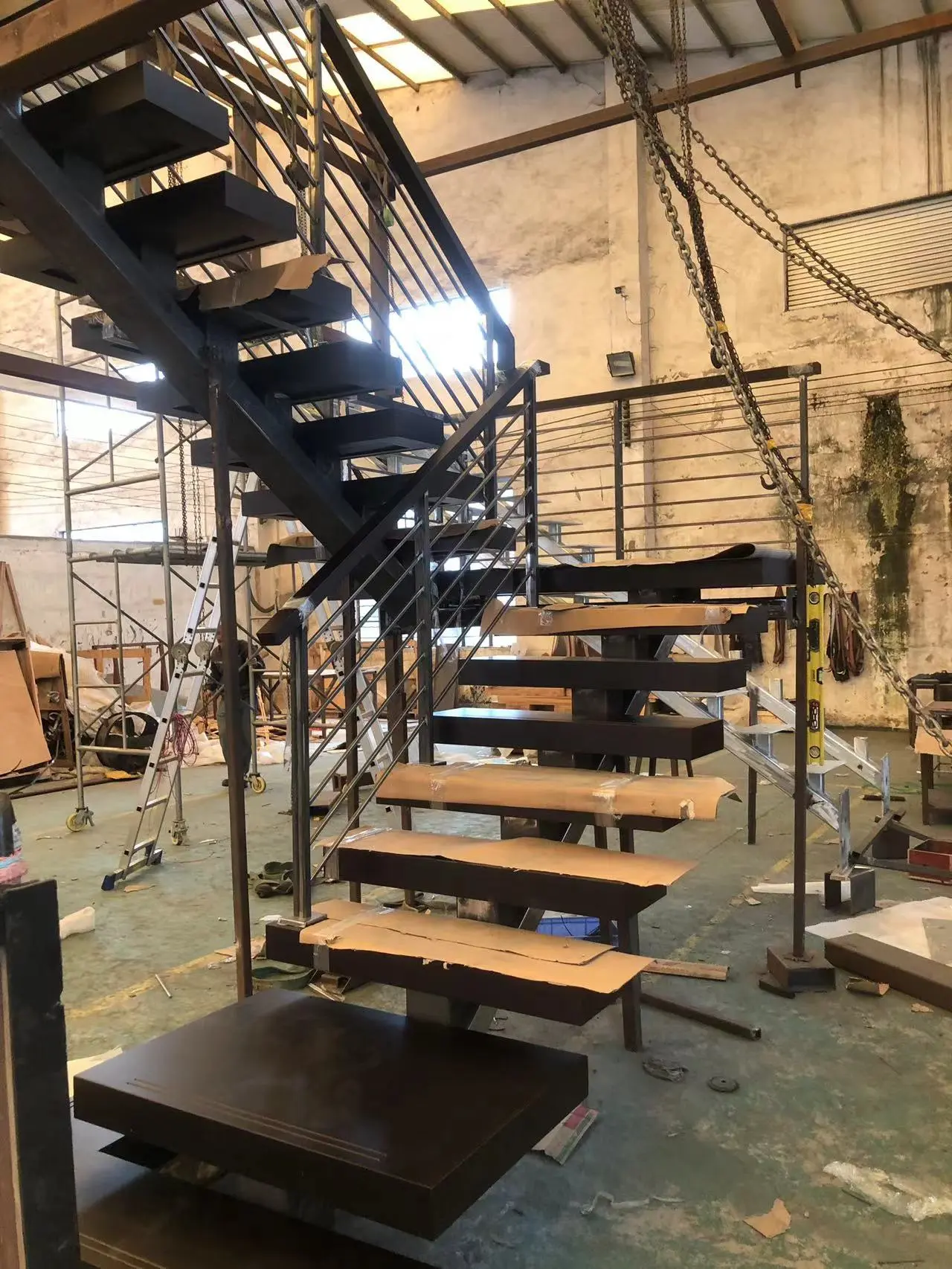
- Material Quality: Don't hesitate to request material certifications like (CQC certificatio) and sample finishes to check the level of durability. When it is about wooden items, besides species look at whether treatment has been done; for metals, check if the anti-rust coatings have been applied.
- Compliance: Ensure that the supplier is meeting the requirements of international safety standards like EN 1090 standards for steel structures.
- Craftsmanship: Carefully check the samples or photos for the quality of welds, polish, and alignment.
- Customization and Design Support: Collaborate with suppliers who are able to utilize your drawings or BIM files.
- Production Capacity: Confirming time frame and ability to scale for mass orders.
- Transparent Quoting: Request itemized pricing including freight and packing costs.
- After-Sales Support and Warranty: Checking warranty coverage and customer service availability is advisable prior to contract signing.
The Process of Buying Staircases from China
It's a lot easier to source staircases when you have a structured approach:
- Research and Shortlist Suppliers: Trade platforms such as Alibaba, Made-in-China, or Canton Fair directories are good places to look for reliable suppliers.
- Sample and Catalog Request: Consider your options for finishes, handrails, and maintain quality by checking samples.
- Factory Audits: Visit factories yourself or employ a third-party quality control provider.
- Specification Definition : Submit CAD plans, list of materials, and exact sizes.
- Contract Negotiation: Discuss in detail guarantees, delivery time, and compensations for postponements.
- Shipping Coordination: Hire a freight forwarder that has experience in shipping architectural parts.
- Inspection upon arrival: Make sure that all the items are in accordance with the approved shop drawings before you do the installation.
Common Challenges and How to Overcome Them
While China presents the greatest competitive advantages, here are some downsides that you have to bear in mind:
- Language Barriers: Bilingual experts or platforms that offer translation support may be employed.
- Quality Variations: Samples must be thoroughly inspected and testing reports must be requested without fail.
- Shipping Damage: Packaging guidelines for a protective crate with foam padding and corner guards must be thoroughly detailed.
- Payment Security: Escrow services, PayPal business accounts, or letters of credit come in handy for ensuring payment security.
Especially if you have big, custom projects, local sourcing agents or QA partners in China can help take a lot of the risk off your level.
The Role of Shop Drawings in Stair Production
Shop drawings play an important role in stair production since they act as a guide on exactly how to make the staircase. They show the details of the materials sizes finishes, and the way the components will be connected structurally.
In fact, these drawings are like a link that connects your design intention to the manufacturer's production operation.
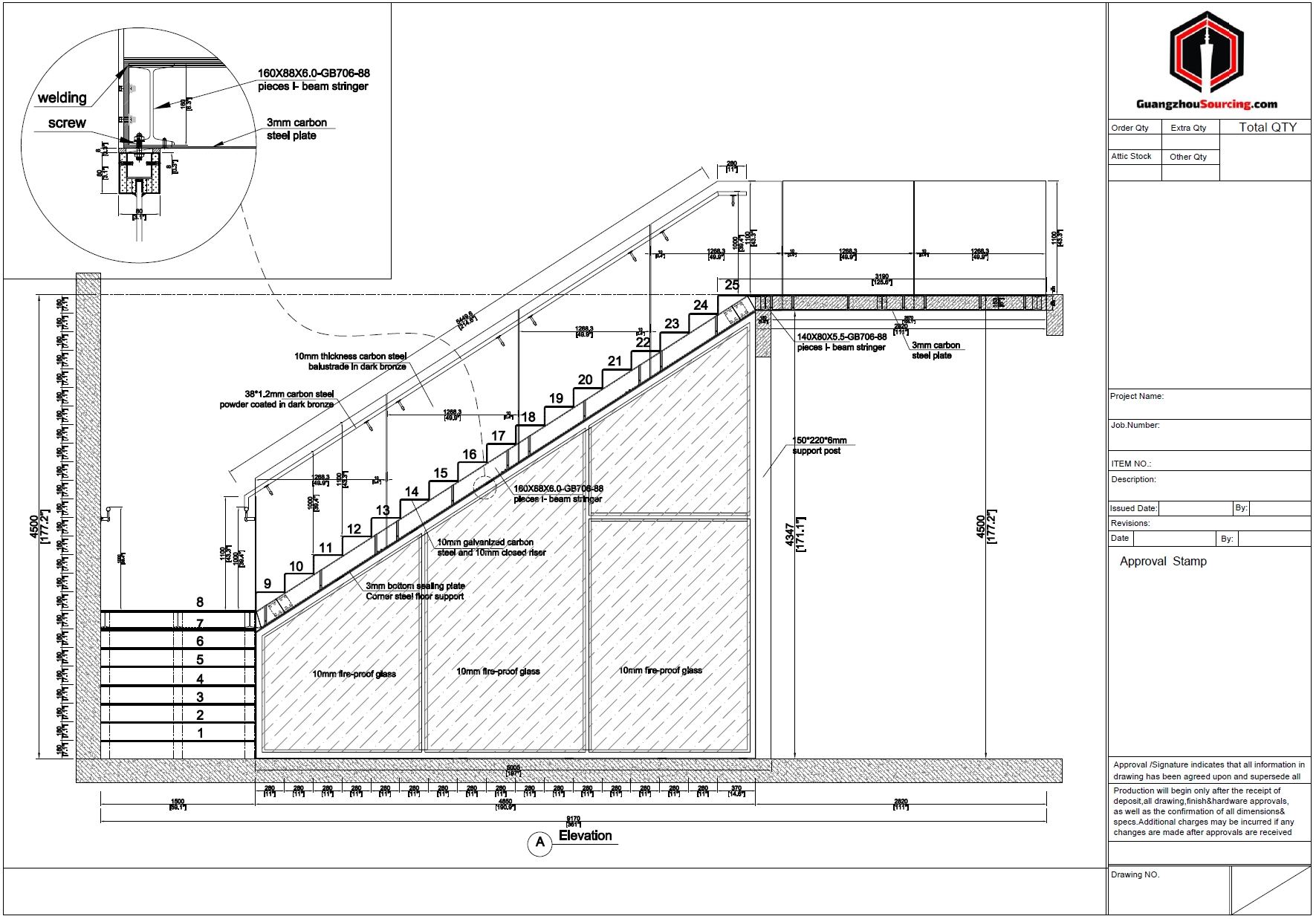 A typical shop drawing for a stairs, we have issued on a previous project
Among the benefits are:
- No miscommunication between design teams and factories - this cuts down on mistakes.
- Costly rework or fabrication errors are prevented when shop drawings are verified.
- Architecture, structure, and aesthetics stay aligned in the final product.
When ordering from China, verified shop drawings guarantee precise manufacturing. Production errors drop and installation runs smoother on site.
CASE STUDY
Custom Metal Staircase for Secret Bay's Art Barn Amenities Building
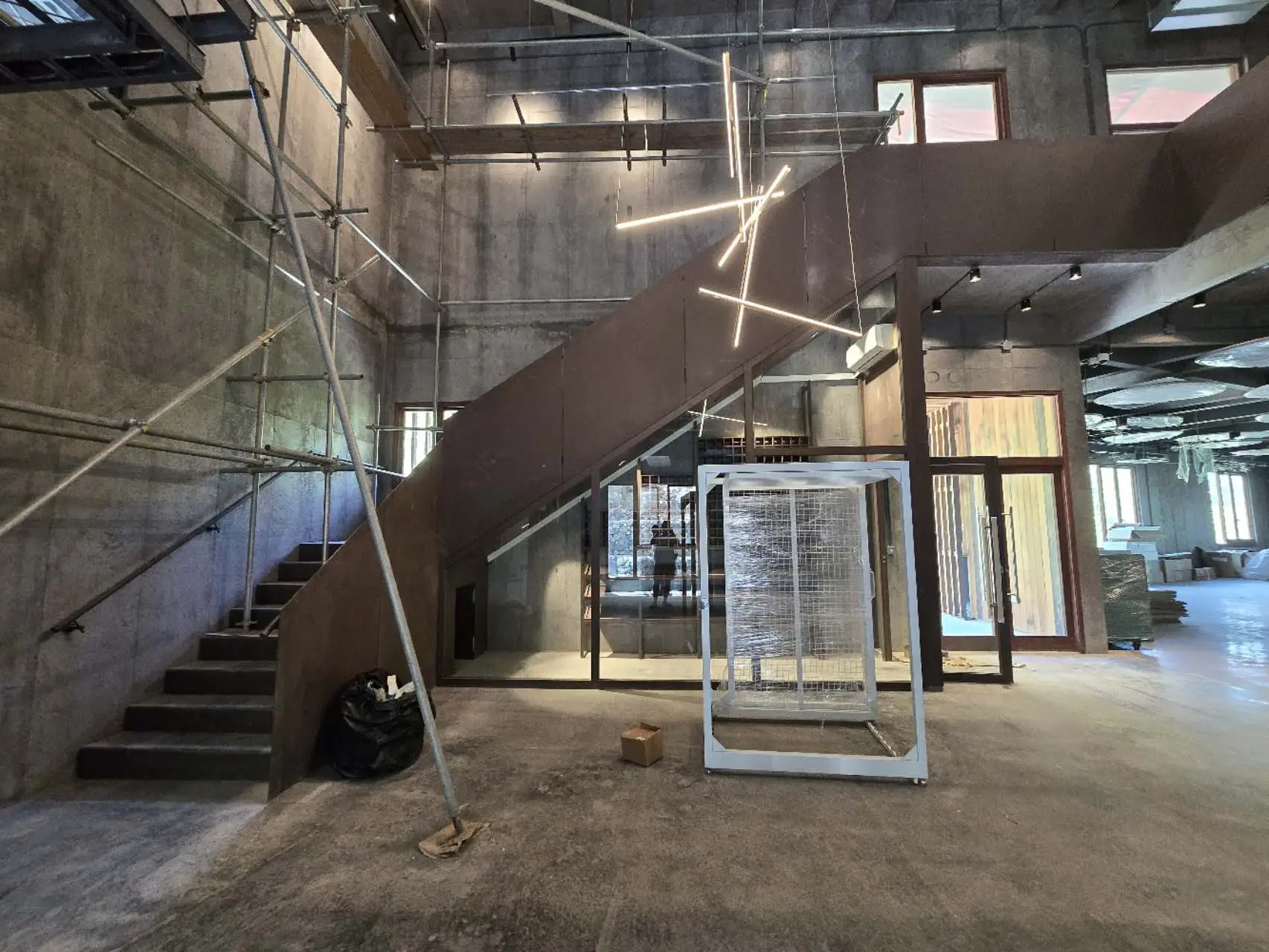
Secret Bay, a luxurious and environmentally responsible resort, sought an exceptional staircase for their Art Barn amenities building. They desired a staircase that would complement the modern style of the building while also providing safe access to the second level where the gallery and restaurant were situated.
The main challenge for us was to design a metal staircase which not only meets these practical aspects but simultaneously becomes a stunning architectural element. We decided on carbon steel for its robustness and the industrial grace, which harmonizes with the modern character of the building. The stairway was designed with great attention to detail to ensure both its safety and stylistic sophistication.
A glass wall under the stairway framework was provided not only to make the staircase more impressive visually but it also served as a demarcation of the wine cellar area. The see-through feature allowed natural light to flow in and create mesmerizing light patterns in the wine cellar interior, while still maintaining the concept of openness.
Handling with great care and precision in the design and implementation of the project was a must. Our team collaborated closely with Secret Bay to refine the staircase's dimensions, materials, and finishing. As a result, a unique metal staircase was designed not only meeting the client's functional requirements but also turning into a remarkable architectural feature of the Art Barn amenities building.
This is a case of us delivering metalwork solutions customized and, at the same time, visually blending well with the rare piece of architecture.
Conclusion
By sourcing staircases in China builders architects, and hospitality developers really open up to production of architectural solutions that are at the same time affordable, high quality, and customizable. Thanks to the technical innovation, vast experience in exporting, design versatility, and an industry built on all these factors, manufacturers of China are quite simply able to make any staircase idea you can think of - credible and stylish.
So if you need a simple glass staircase for a hotel lobby, a very strong steel stair for industrial use, or a wooden stairway that is a piece of art for a luxury villa, the Chinese factory can turn your imagination into reality very quickly.
Collaborate with knowledgeable suppliers and, after checking the quality by both drawings and physical inspections, you will get architectural designs of stairs that are both very impressive and hard-wearing - a wise decision for any kind of project.