
When you want to import bathroom products from China, you will soon find yourself in a crucial situation: whether to select sanitary ware OEM or ODM manufacturing.
This option is not simply a technical one. It directly impacts you in terms of your cost, product quality, brand identity, and speed to market.
China is the leading global manufacturer of sanitary ware, possessing firm manufacturing clusters, advanced manufacturing plants and full manufacturing chains. Foshan, Guangzhou and other cities produce faucets, toilets, showerheads, and bathroom fixtures for export to the world on a daily basis.
At Guangzhou Sourcing, we help you understand this system in a simple way. We work closely with factories and international buyers, so we know what actually works in real sourcing situations—not just theory.
This guide will help you to understand the difference between OEM and ODM, both of which work in different ways, when to use each, and how to avoid expensive mistakes. You'll also find real examples, comparisons and tips on how to source experts in the real world.
Let's begin with the most crucial base.
Quick Comparison Table: OEM vs. ODM Sanitary Ware
For your convenience, here is a basic comparison between sanitary ware ODM and sanitary ware OEM. This table shows how both models perform in real sourcing situations.
Feature | Sanitary Ware OEM (Original Equipment Manufacturer) | ODM (Original Design Manufacturer) |
Product Design | Fully custom, based on your idea | Already designed by factory |
Brand Control | Very high | Moderate |
Customization Level | High (full flexibility) | Limited (minor changes only) |
Development Cost | Higher (molds + design) | Lower (no design cost) |
Production Time | Longer due to development process | Faster since products are ready |
MOQ (Minimum Order) | Usually higher | Usually lower |
Market Uniqueness | High (exclusive products) | Low to medium (shared designs) |
Best For | Established brands, luxury projects | Startups, online sellers |
Risk Level | Medium (design & development risk) | Lower (tested products) |
Profit Margin Potential | Higher (premium pricing possible) | Moderate (price competition common) |
This comparison will help you grasp one thing at a glance:
- OEM is about brand building and uniqueness for the long term.
- The ODM is for quick entry and reduced investment risk.
We know that you want to avoid sourcing mistakes and that's why we can help you determine which model is best suited for your business stage, budget and target market at Guangzhou Sourcing.
What Is Sanitary Ware OEM?
OEM is Original Equipment Manufacturing. In simple terms, you give the idea, design, specs or requirements of the product, and the factory produces the item for your brand.
Hence, many growing brands opt for sanitary ware OEM manufacturing. These give them a chance to create something different from what is being sold by others.
If you wish, for instance, to:
- A custom-designed faucet
- An intelligent toilet with special functions
- A premium matte black shower system
- Marketing and branding that sets itself apart.
If that's the case, then OEM is typically the best alternative.
The factory produces the product; the design and brand are yours.
How the Sanitary Ware OEM Process Works
New buyers believe that OEM manufacturing is a complicated process. In fact, the process is easy once you have an understanding of each step.
Sanitary Ware OEM Manufacturing Step | What Happens |
Product Idea | You share your design or requirements |
Technical Drawings | Factory reviews specifications |
Mold Development | New molds or tooling are created |
Sample Production | Prototype samples are tested |
Mass Production | Factory starts manufacturing |
Quality Inspection | Products go through QC checks |
Packaging & Branding | Your logo and packaging are added |
Shipment | Products are exported to your country |
For instance, a hotel company might desire particular bathroom faucets with its logo, water-efficient system, and high-end finish. The Chinese factory produces the products just according to those requirements!
This allows the buyer to have full control over:
- Product appearance
- Materials
- Functions
- Packaging
- Brand positioning
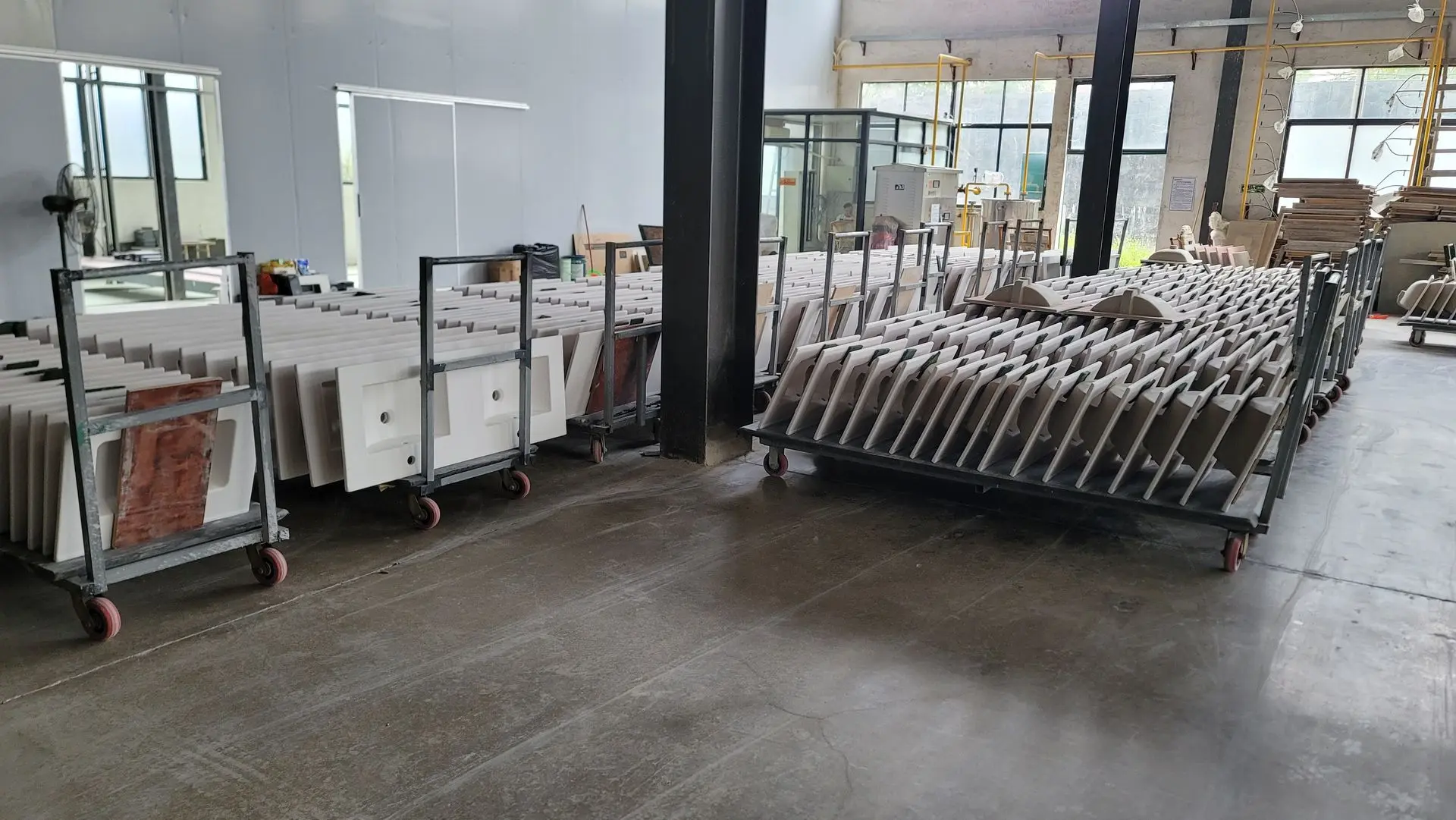
Common Sanitary Ware OEM Products
There are many bathroom product categories, and OEM manufacturing is popular among each.
The most popular products include:
- Faucets
- Shower systems
- Wash basins
- Smart toilets
- Ceramic toilets
- Bathroom vanities
- Bathtubs
- Bathroom accessories
- Sensor taps
- Hotel bathroom fixtures
Sanitary ware factories in China now enable leading OEMs to customize their products with smart bathroom technology, eco-friendly materials and luxury finishes.
Advantages of Sanitary Ware OEM
If you are looking to grow your brand in the long term, OEM manufacturing will have several benefits.
1. Full Product Customization
This is the greatest benefit.
You control:
- Design
- Size
- Material
- Finish
- Features
- Packaging
Your products are unique from others.
Some luxury bathroom companies, for instance, manufacture special matte gold faucets or smart touchless systems using OEM manufacturing.
2. Strong Brand Identity
If your products are unique, it is easier for customers to remember your brand.
This helps you:
- Build trust
- Increase repeat orders
- Improve market positioning
- Don't compete head-to-head with other retailers on price.
You don't compete on price; you compete on quality and uniqueness.
3. Better Profit Margins
In general, custom products are able to be sold at a higher price.
People typically pay a higher price for:
- Premium designs
- Better packaging
- Exclusive features
- Smart technology
- Eco-friendly solutions
This enables brands to be more profitable in the long run.
4. Greater Quality Control
When using OEM manufacturing:
- Raw materials
- Product standards
- Technical specifications
- Testing requirements
That provides you with consistency of quality.
Disadvantages of OEM Manufacturing
OEM also has its challenges.
You need to be familiar with them before you select this model.
1. Higher Initial Investment
OEM often requires:
- Mold costs
- Design costs
- Sample development fees
These expenses may be costly for startups.
2. Longer Production Time
It takes time to make customized products.
Lead time may be extended due to the creation of new molds, testing and/or approvals.
Based on industry reports, the production of sanitary ware usually takes about 35–45 days for an OEM depending on the level of customization.
3. Higher MOQ
There are many factories that need larger minimum orders for OEM projects.
This is because factories have to recover their mold and set up expenses.
4. More Buyer Involvement
For OEM sanitary ware, communication with suppliers is a must.
You have to watch:
- Samples
- Quality
- Packaging
- Certifications
- Production timelines
Hence, many businesses are opting to utilize sourcing firms such as Guangzhou Sourcing for hassle-free sourcing solutions.
What is Sanitary Ware ODM?
Original Design Manufacturing is what is referred to as ODM.
In this model, the factory already has product designs for the product. All you have to do is pick items from the supplier's catalog and resell them with your own brand name.
Consider ODM as “ready-to-brand” manufacturing.
The factory designs it for you and you concentrate on the following:
- Branding
- Sales
- Marketing
- Distribution
This model is extremely well liked by:
- Startups
- Small importers
- Amazon sellers
- E-commerce businesses
It cuts down development cost and accelerates the product launches.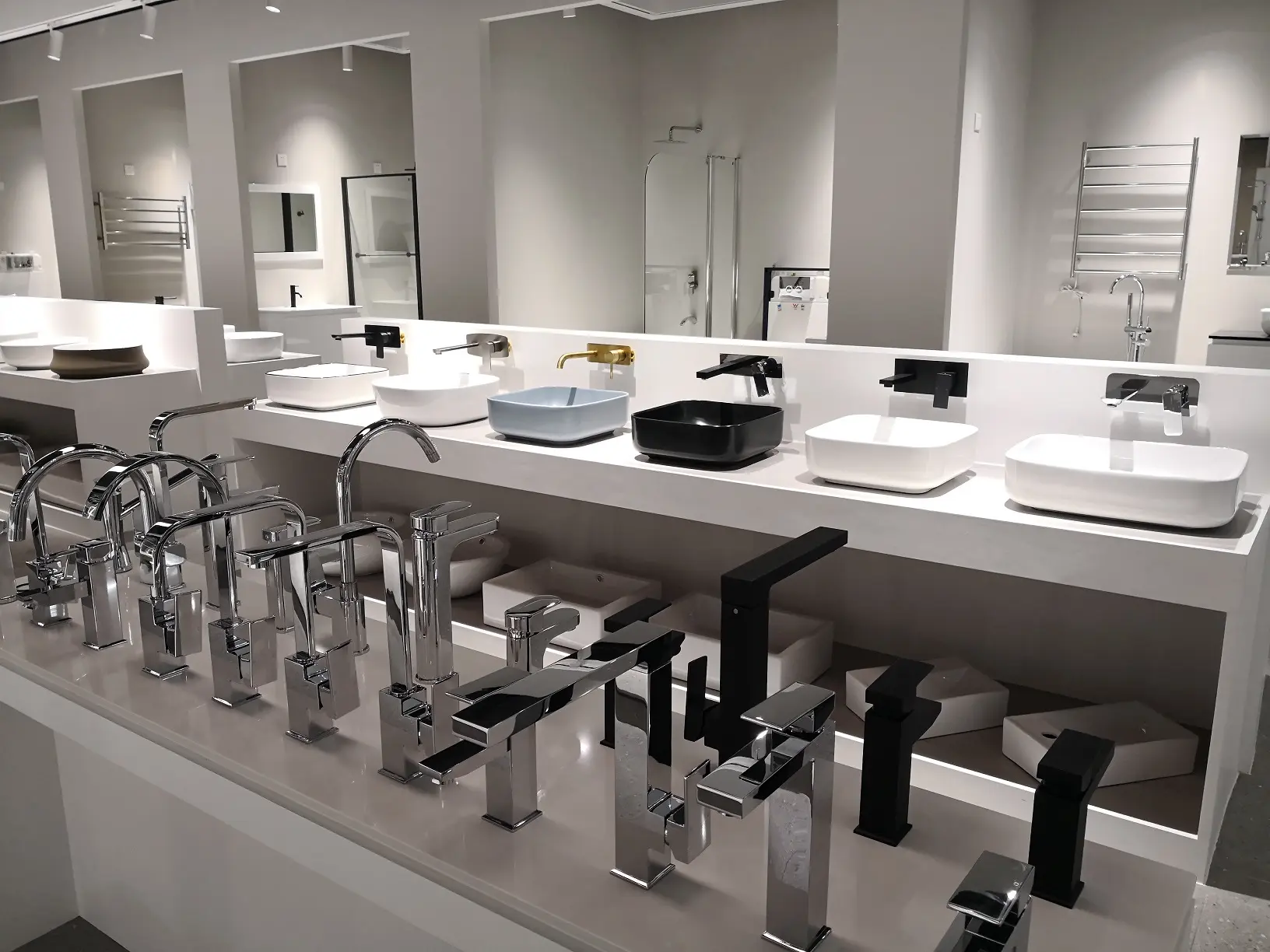
How ODM Sanitary Ware Production Works
The ODM is much quicker than the OEM process.
Typically, that's how it goes.
ODM Process | What Happens |
Product Selection | Buyer selects from already available designs |
Minor Customization | Changes to the Logo or packaging. |
Sample Approval | Buyer checks samples |
Mass Production | Factory manufactures products |
Branding | To add private label packaging to the product. |
Shipping | Products exported |
For instance, if you are looking to sell bathroom faucets fast, you could pick from the faucet designs and add your logo to it from the supplier's showroom.
This is a huge timesaver and costcutter.
Advantages of ODM Manufacturing
1. Faster Time to Market
Such products are already available in the market as ODM products.
The only requirements for factories are to
- Add your branding
- Produce the products
- Ship the order
This will enable quicker launch times.
According to various reports, sourcing from an ODM can cut the development time by 30 to 50% as compared to manufacturing them from an OEM.
2. Lower Investment
Many development costs are avoided in ODM.
You usually avoid:
- Mold costs
- Design engineering
- Product R&D expenses
This is what makes ODM appealing to small businesses.
3. Lower Risk
As there are already products, factories know the following:
- Manufacturing process
- Quality control
- Market demand
This minimizes risks in production.
4. Lower MOQ
ODM suppliers are willing to order smaller quantities.
This can help companies to launch and test new markets without a significant investment in inventory.
Limitations of ODM Manufacturing
There are also disadvantages of ODM.
1. Limited Customization
Redesign of the product is not possible.
Typically, change is only possible when:
- Logo
- Packaging
- Colors
- Small details
2. Less Brand Uniqueness
The product may be available on the market from other companies.
This results in greater price pressures.
3. Limited Product Exclusivity
The design belongs to the supplier, so there is a possibility of your competitors using similar products.
It makes it more difficult to differentiate in the long term.
OEM vs. ODM Sanitary Ware: Key Differences
The simplest way to compare both models.
Feature | Sanitary Ware OEM | Sanitary Ware ODM |
Product Design | Buyer-owned | Factory-owned |
Customization | High | Limited |
Development Cost | Higher | Lower |
Production Speed | Slower | Faster |
MOQ | Higher | Lower |
Branding Power | Strong | Moderate |
Product Exclusivity | High | Low |
Best For | Established brands | Startups |
Market Entry Speed | Medium | Fast |
IP Protection | Better | Limited |
This comparison provides a good idea of why companies that have been in existence often opt for sanitary ware OEM production and why startups often start out using sanitary ware ODM products.
Which Businesses Should Choose Sanitary Ware OEM?
For businesses looking to grow their brands in the long term, OEM is the best option.
Established Bathroom Brands
For big brands, they must have products that will make them stand out.
OEM helps them:
- Create exclusive designs
- Ensure their brand reputation is maintained.
- Maintain their brand identity.
- Offer premium products
Importers and Distributors
The reasons for choosing OEM for high-volume distributors include that they can:
- Design products to suit regional requirements
- Improve margins
- Develop private label products
Luxury Bathroom Brands
Luxury buyers want:
- Unique finishes
- Premium materials
- Advanced features
For premium applications, OEM ensures that the entire product can be personalized.
Smart Bathroom Companies
This is because many kitchen and bathroom items that can be referred to as smart products, such as smart toilets, touchless faucets, and sensor systems, must be custom engineered.
OEM manufacturing is the foundation for innovative advanced products.
Smart sanitary ware is still a rapidly expanding market in China due to consumers' increasing demand for smart and water-saving bathroom products.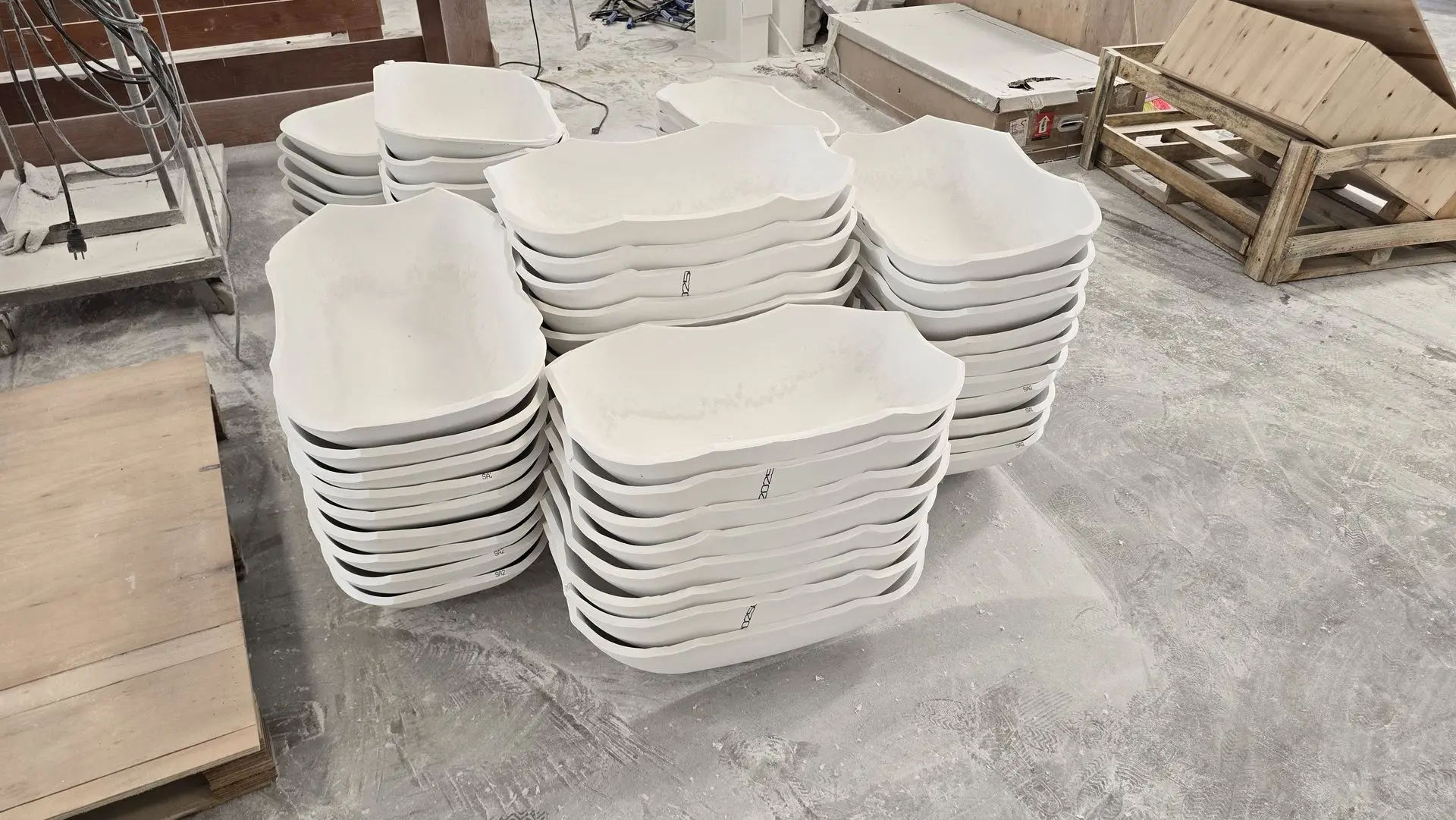
Which Businesses Should Choose Sanitary Ware ODM?
For businesses that desire agility and lower costs in getting to market, ODM is the preferred approach.
Startups
Many startups start with ODM due to the fact that they can
- Launch quickly
- Reduce risk
- Test demand
- Save development costs
Amazon and E-commerce Sellers
The following reasons are why online sellers use ODM products:
- Fast inventory
- Lower MOQ
- Simple branding
Businesses Testing New Markets
Through ODM, businesses can try out products before sinking a lot of money into custom-made designs.
This minimizes financial risk.
Companies Needing Fast Delivery
When it is more important to move quickly than to invest in exclusivity, then ODM is a viable answer.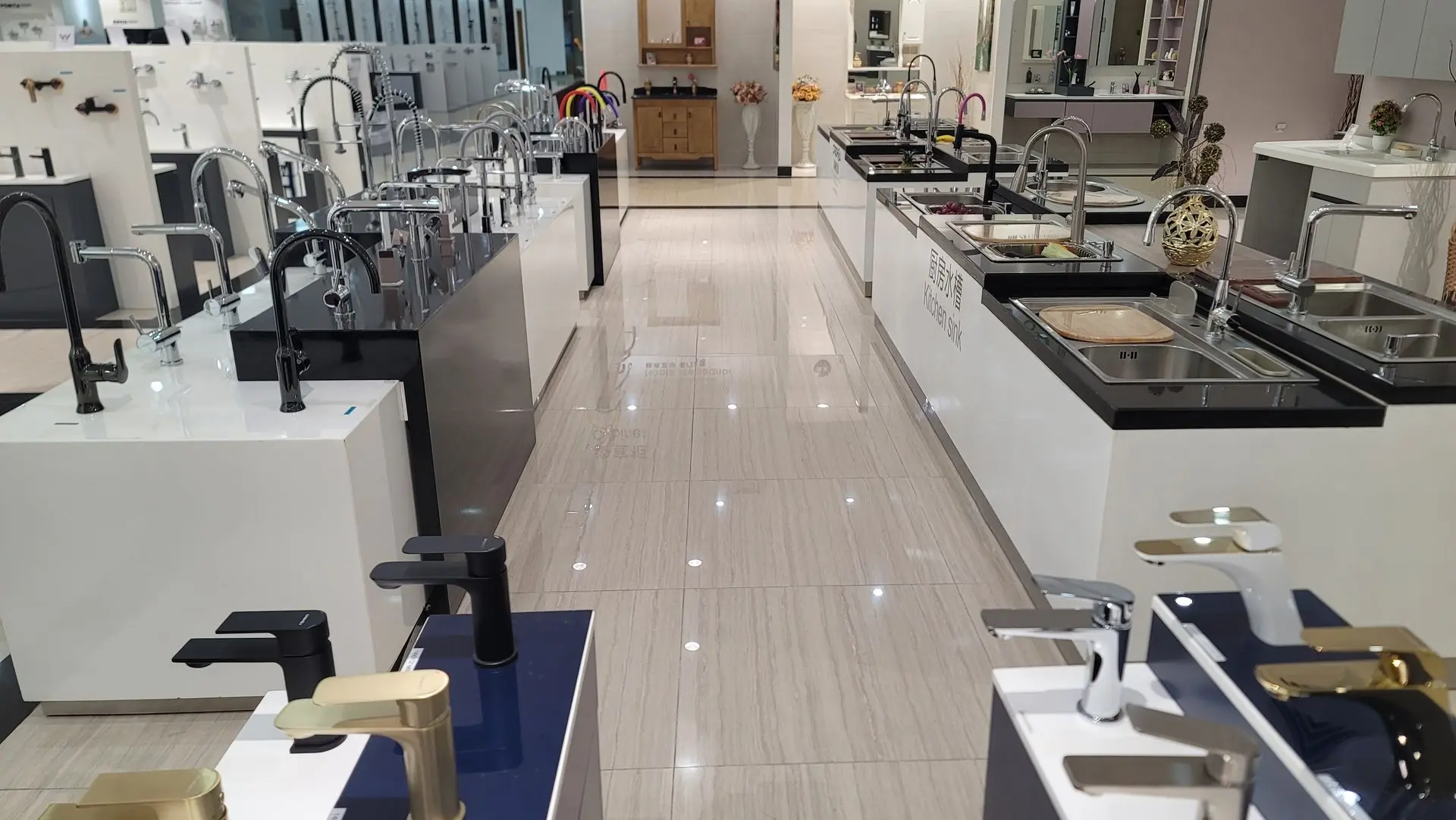
Why China Dominates Global Sanitary Ware Manufacturing
China is the leader of the sanitary industry because of various factors.
The country offers:
- Large-scale manufacturing
- Complete supply chains
- Competitive pricing
- Skilled labor
- Advanced machinery
- Strong export experience
According to industry reports, China is still the top sanitary ware-producing country and it has a high concentration of production areas in the provinces of Guangdong and Fujian.
Foshan and Guangzhou: The Heart of China’s Sanitary Ware Industry
If you are buying sanitary ware from China, you will surely come across the name "Foshan" since it is one of the world's largest centers for making sanitary ware products. The city is a major center for sanitary ware buyers from around the world, with most OEM / ODM factories located here.
Foshan is famous for its production of the following:
- Building materials such as toilet bowls and sinks
- Different finishes for faucets and Brass fittings
- Hospital shower systems, residential shower systems, and hotel shower systems.
- Bathroom furniture such as vanities and cabinets
Guangzhou is an important supporting city in the supply chain nearby. It is mainly focused on:
- Handling and documentation for export/import transactions.
- Logistics and international shipping assistance
- Supplier exhibitions and trade fairs
This is the manufacturing strength of Foshan and the export capability of Guangzhou, making it very efficient to source the sanitary ware products.
At Guangzhou Sourcing, we work closely with factories in this area because it allows us to manage OEM and ODM projects smoothly, reduce sourcing risks, and ensure better product quality for our clients.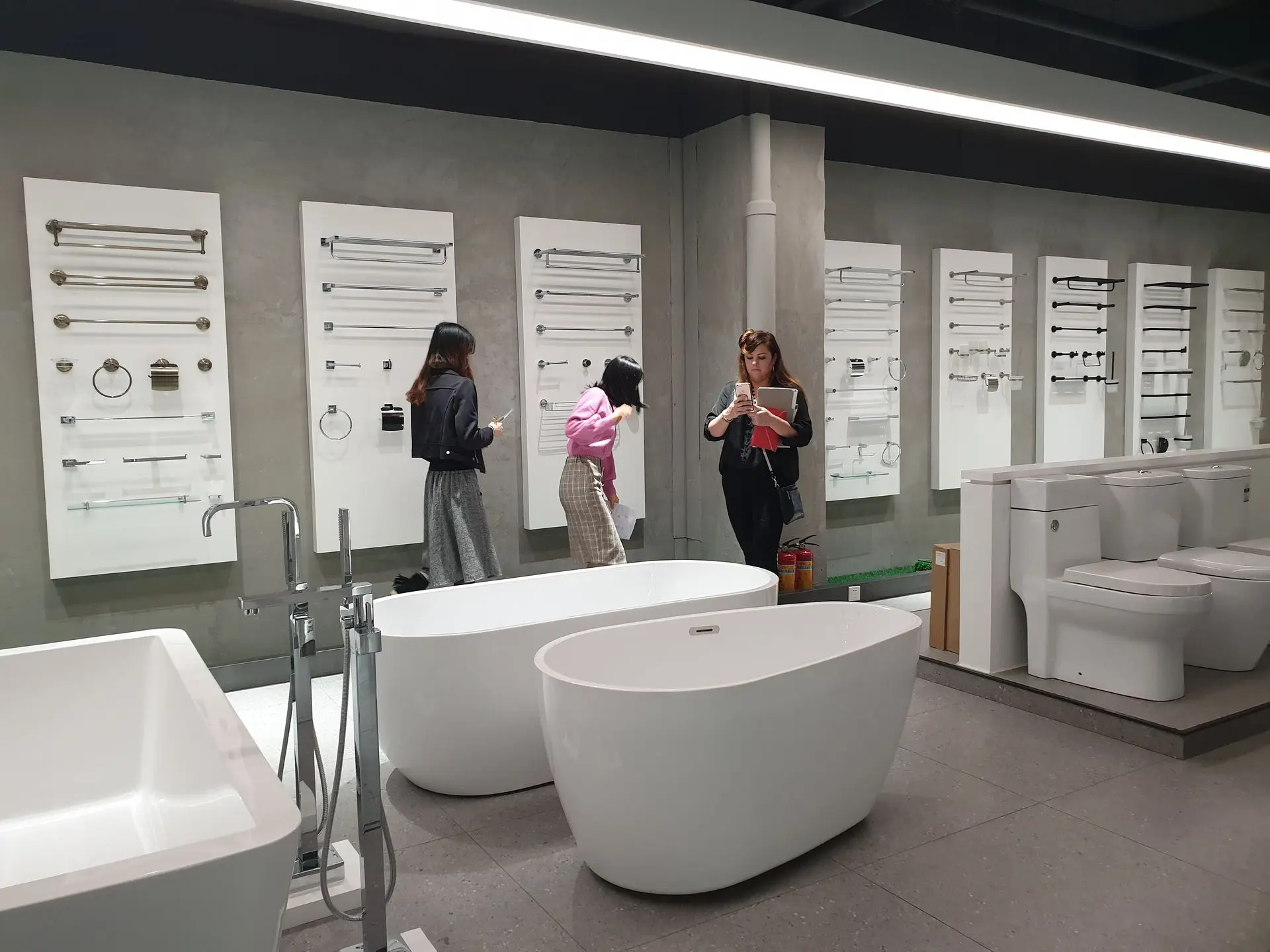
Important Factors to Consider Before Choosing OEM or OD
There are a number of important factors that you need to consider before choosing a sourcing model.
1. Your Budget
OEM needs more investment.
The drawback of ODM is that it is more expensive than OEM.
Ask yourself:
- Would you like to have mold develop?
- Are you able to take a higher MOQ?
- Are you looking for brand building over the long run?
2. Your Branding Goals
OEM is typically the preferred choice if your objective is quality branding.
If you just want to see the sales come in, then ODM might be ok.
3. Time-to-Market
Need fast product launch?
ODM usually wins.
Want long-term exclusivity?
The investment pays off better as OEM.
4. Product Customization Needs
Some businesses need:
- Custom colors
- Smart technology
- Special materials
- Exclusive packaging
OEM allows for greater customization.
5. Order Volume
Higher MOQ can be expected for OEM projects in factories.
Initially ODM might be easier if you are ordering small quantities.
6. Intellectual Property Protection
You have more IP ownership with OEM; the design is yours.
Under ODM, suppliers can supply the products to a number of buyers, who have similar product needs.
How to Find a Reliable Sanitary Ware OEM Manufacturer in China
One of the key tasks in sourcing is to identify the right supplier.
A bad supplier can create the following:
- Delays
- Quality problems
- Shipping issues
- Certification failures
While visiting Guangzhou Sourcing, we suggest you pay attention to these points.
Verify Factory Certifications
Reliable factories typically have certifications such as the following:
These certifications assist in making sure that they are in compliance with the international markets.
Request Product Samples
Always test samples before placing bulk orders.
Check:
- Material quality
- Surface finish
- Water pressure performance
- Packaging quality
- Durability
Check OEM Experience
There are some factories that only process the standard ODM production.
Some offer more specialized customization for OEMs.
Ask about:
- Mold development
- R&D support
- Engineering capabilities
- Export markets
Visit Trade Shows
Trade fairs give buyers the opportunity to match suppliers head-on.
Popular events include:
- Canton Fair
- Kitchen & Bath China
- The exhibitions for sanitary wares in Foshan are a place where you can enjoy yourself.
Established buyers are advised to go to the factories within the manufacturing belt of Guangzhou-Foshan, as the supply chain is far sturdier and the production can be managed better.
Evaluate Communication Quality
Communication is the key to avoiding sourcing errors.
A good supplier will:
- Reply clearly
- Understand technical details
- Share production updates
- Provide inspection reports
Often poor communication is responsible for expensive issues.
Common Mistakes Buyers Make When Sourcing Sanitary Ware
Buyers rush to source, and many sourcing problems occur.
These are the top five errors.
Choosing Only by Price
Low quality products can lead to the following:
- Leakage
- Poor durability
- Certification issues
- Customer complaints
It doesn't always pay to take the cheapest supplier.
Ignoring Certifications
There are requirements in different countries.
For example:
- WaterMark is frequently needed in Australia.
- It is possible that North America needs CUPC.
- Although the US does not need CE certification, it could be required in Europe.
When performing any kind of production, always check certifications.
Skipping Factory Audits
Some of these “factories” are in fact companies that trade.
During factory audits, the following is verified:
Real production capability
Machinery
Workers
Quality systems
Not Clarifying OEM Ownership
Always define:
- Mold ownership
- Design ownership
- Packaging rights
- Exclusivity agreements
This is good for your business.
Ignoring Packaging Quality
Bad packaging causes:
- Shipping damage
- Product returns
- Customer complaints
Packaging plays a very important role with exports of sanitary ware.
OEM and ODM Trends in the Sanitary Ware Industry for 2026
The bathroom market is rapidly evolving.
Nowadays, buyers are looking for more than just products.
These are the most significant trends for 2026.
Smart Bathroom Technology
Smart products are growing at a rapid pace.
Popular products include:
- Smart toilets
- Touchless faucets
- LED mirrors
- Sensor flushing systems
- App-controlled showers
There are increasingly more factories that can provide advanced OEM customization services.
Eco-Friendly Manufacturing
Nowadays, sustainability is more important than ever.
Buyers increasingly request:
- Water-saving products
- Eco-friendly materials
- Recyclable packaging
- Low-lead faucets
Environmental compliance is also a factor in supplier selection.
Customized Luxury Bathrooms
Today's buyers expect a customized bathroom experience.
Now the luxury hotel projects require:
- Custom finishes
- Premium textures
- Smart systems
- Designer collections
Customization is still a major trend in the industry.
Faster Lead Times
Global buyers are now demanding quicker productions.
Factories are investing in:
- Automation
- Integrated manufacturing
- Smarter logistics
This can help to minimize delays.
Integrated Supply Chain Solutions
A large number of buyers now ask the suppliers to offer the following:
- Multiple bathroom products
- Packaging
- Quality inspection
- Consolidated shipping
This simplifies sourcing.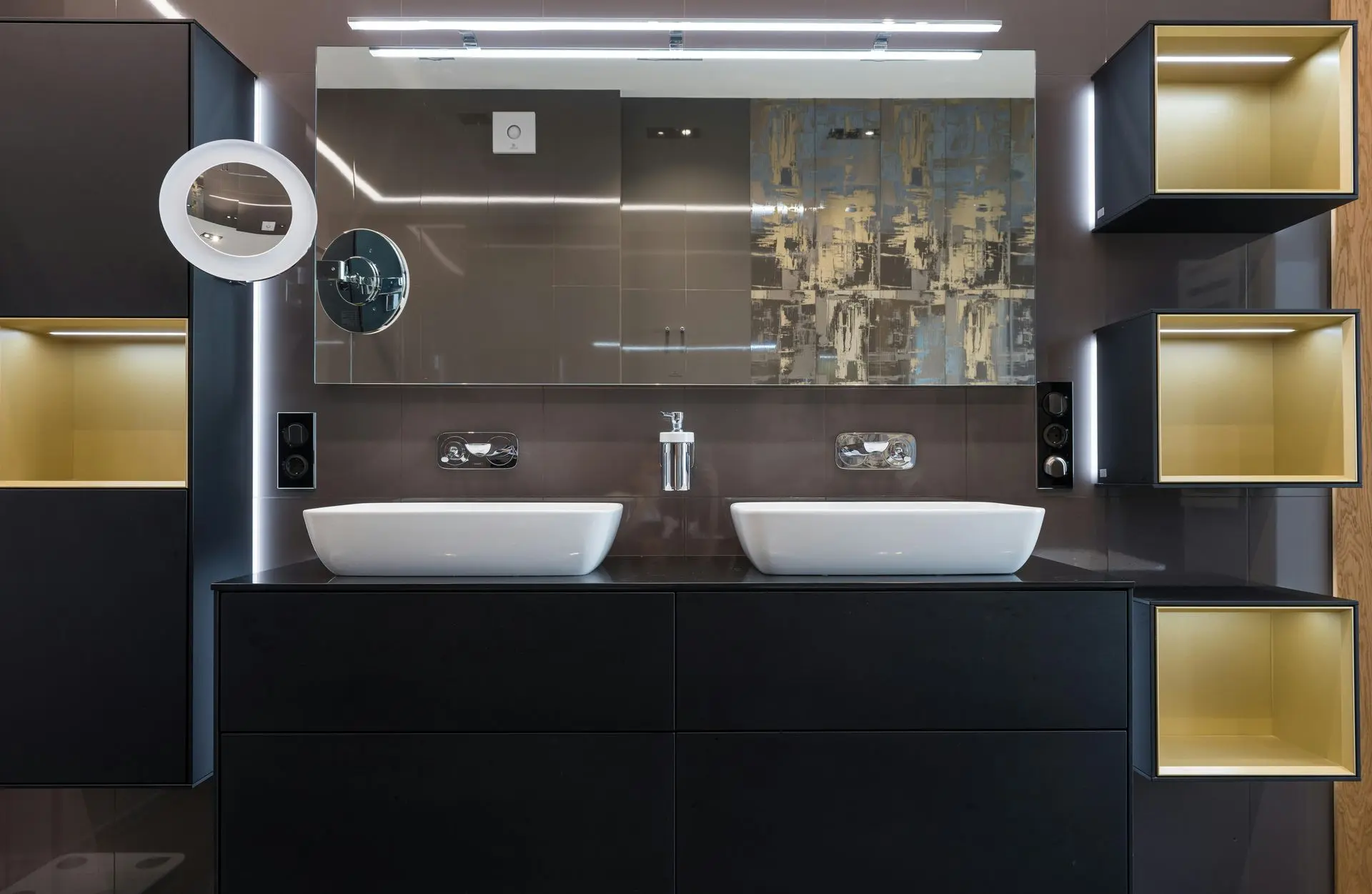
Real Examples: OEM vs ODM Decision
Let's take an example of a simple case.
This is a great example of a startup business, Amazon Seller.
Example 1: Startup Amazon Seller
A small online retailer is eager to get bathroom faucets in the market.
Best choice:
- ODM manufacturing
- Lower MOQ
- Faster launch
- Lower investment
Example 2: Luxury Hotel Brand
A hotel group requires bathroom fixtures that are done in an exclusive way and are branded.
Best choice:
- OEM manufacturing
- Custom design
- Premium packaging
- Exclusive branding
Expert Tips for Successful Sanitary Ware Sourcing
These are some tips we share with buyers at Guangzhou Sourcing.
Start With Small Orders
Test suppliers prior to large orders.
This reduces risk.
Always Use Third-Party Inspection
Independent inspection companies assist to confirm the following:
Product quality
Packaging
Production consistency
Focus on Long-Term Relationships
Trustworthy suppliers turn into valuable long-term associates.
The quality of relationships can often be enhanced:
Pricing
Production priority
Communication
Quality consistency
Understand Your Target Market
There are various market styles and certifications you can find for different markets.
For example:
- Minimalism is the preferred style in Europe.
- In the Middle East, luxury finishes could be given preference.
- North America places a greater emphasis on compliance certifications.
Final Thoughts: Which Model Fits Your Business?
There are benefits to both OEM and ODM sourcing.
You should choose the best of them, depending on your
- Budget
- Business size
- Branding goals
- Product strategy
- Timeline
If your vision is to develop your brand, create unique products and improve your market position then sanitary ware OEM manufacturing is generally the more intelligent choice. It provides better brand control, product exclusiveness, and more flexibility in customization.
For rapid market entry with lesser risk and investment, ODM services can help you test the demand before scaling up.
At Guangzhou Sourcing, we assist businesses in making sanitary ware sourcing in China much easier by supplier verification, factory audit, quality inspection, OEM customization support and export management. If you ae looking for an OEM bathroom manufacturer or quick ODM solutions, finding the right supplier is crucial for success.
Now is the time to strengthen the sourcing strategy for sanitary ware products from China. Contact us to expand your exploration of reliable factories, customized OEM solutions and cost-effective bathroom product sourcing for your business.
FAQs
1. What does "sanitary ware OEM mean?
Sanitary ware OEM is a factory producing bathroom products based on the buyer's custom design, specifications and branding requirements.
2. What is the difference between OEM and ODM?
OEM: It is a customized product with a buyer's brand name and ODM: It is a factory-made product with a buyer's brand name.
3. Which is better for startups: OEM or ODM?
ODMs tend to be more suitable for startups due to the lower investment and quicker product launch.
4. Is OEM more expensive than ODM?
Yes. OEM will typically be more expensive due to the custom molds, design, and product development process.
5. How long does OEM sanitary ware production take?
Depending on order size and customization complexity, order processing can take approximately 35-45 days for OEM production.
6. What certifications should sanitary ware suppliers have?
Common certifications include:
- ISO9001
- CE
- CUPC
- WaterMark
- WRAS
- WaterSense
7. Can I put my logo on ODM bathroom products?
Yes. The majority of ODM suppliers offer logo printing and custom packaging.
8. Why do buyers source sanitary ware from China?
China offers:
- Competitive pricing
- Advanced factories
- Large production capacity
- Strong OEM/ODM capabilities
- Complete supply chains